The pursuit of musical truth.
Luke’s HiFi Adventures is a record of more than a decade spent asking a deceptively simple question: what makes reproduced music stop sounding like equipment and start feeling like a performance?
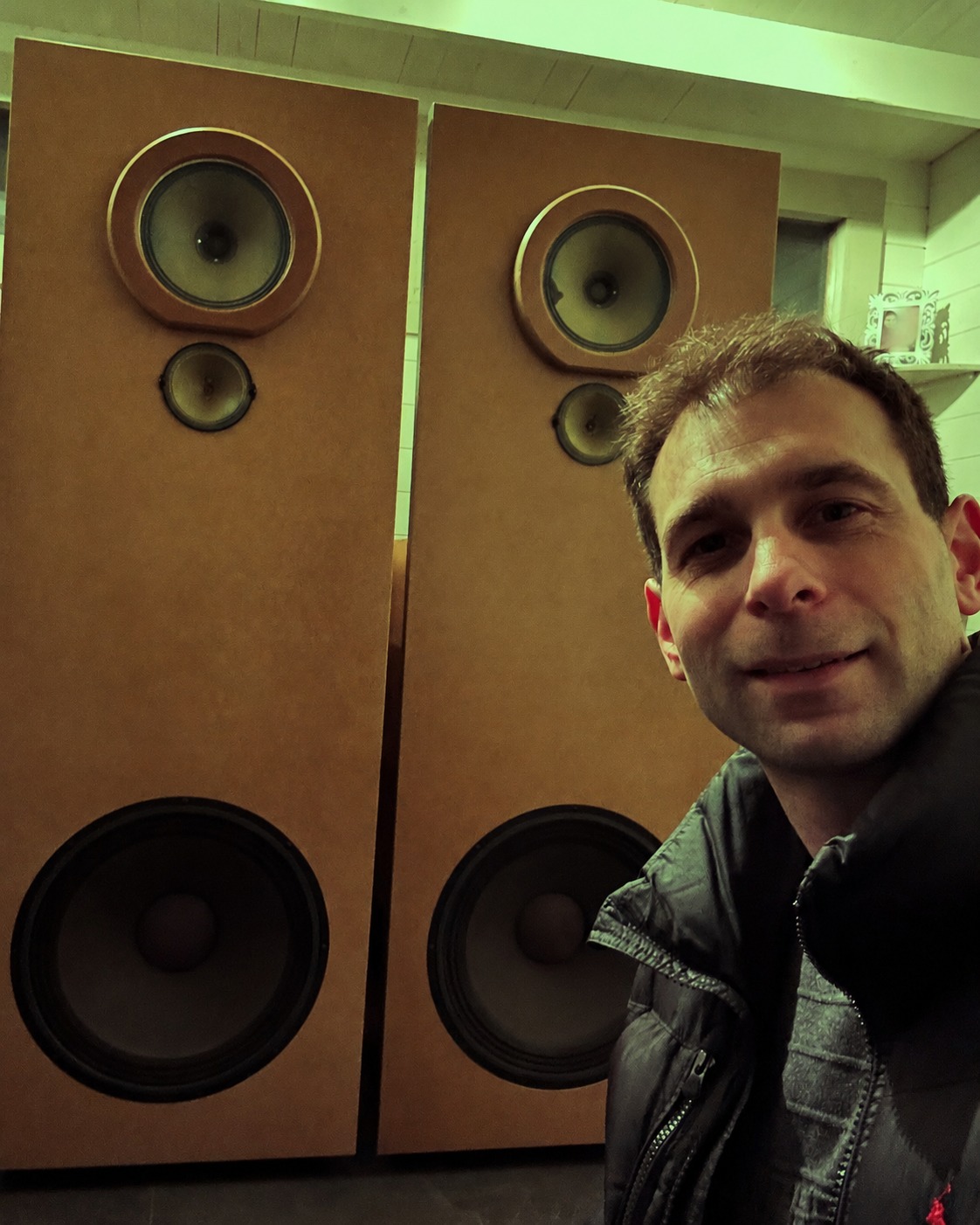
The journey in brief.
A system is a chain of translators.
Every stage either protects the information that makes music human, or changes it. The work here is about understanding those changes by listening repeatedly, documenting them, and building systems whose individual personalities add up to a coherent whole.
Voice and instruments need harmonic weight, not just outline.
Space, decay and atmosphere should arrive without glare or forced brightness.
Depth matters only when images have shape, scale and physical plausibility.
Analysis should remain available without breaking the performance into parts.
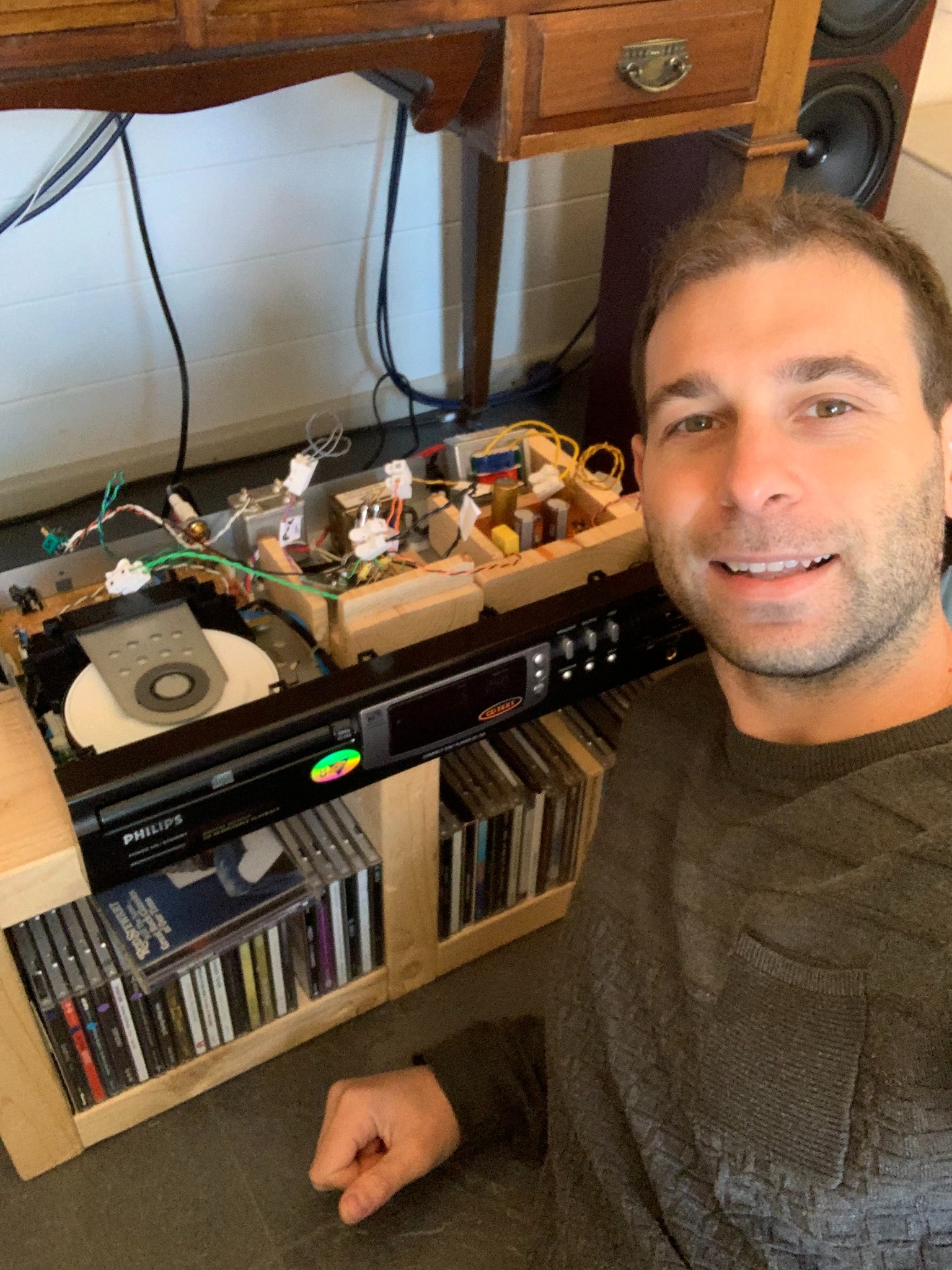
Research deeply. Listen honestly. Keep what lives.
The archive behind the work spans vintage multibit DACs, valve output stages, power supplies, op-amps, analogue, portable audio, loudspeaker architecture and hundreds of dated listening observations.
Specifications matter. Circuit topology matters. Component quality matters. But none is the destination. The final test is whether a change increases presence, coherence, tonal truth and emotional connection without sanding away the character of the recording.
P17: when the equipment disappears.
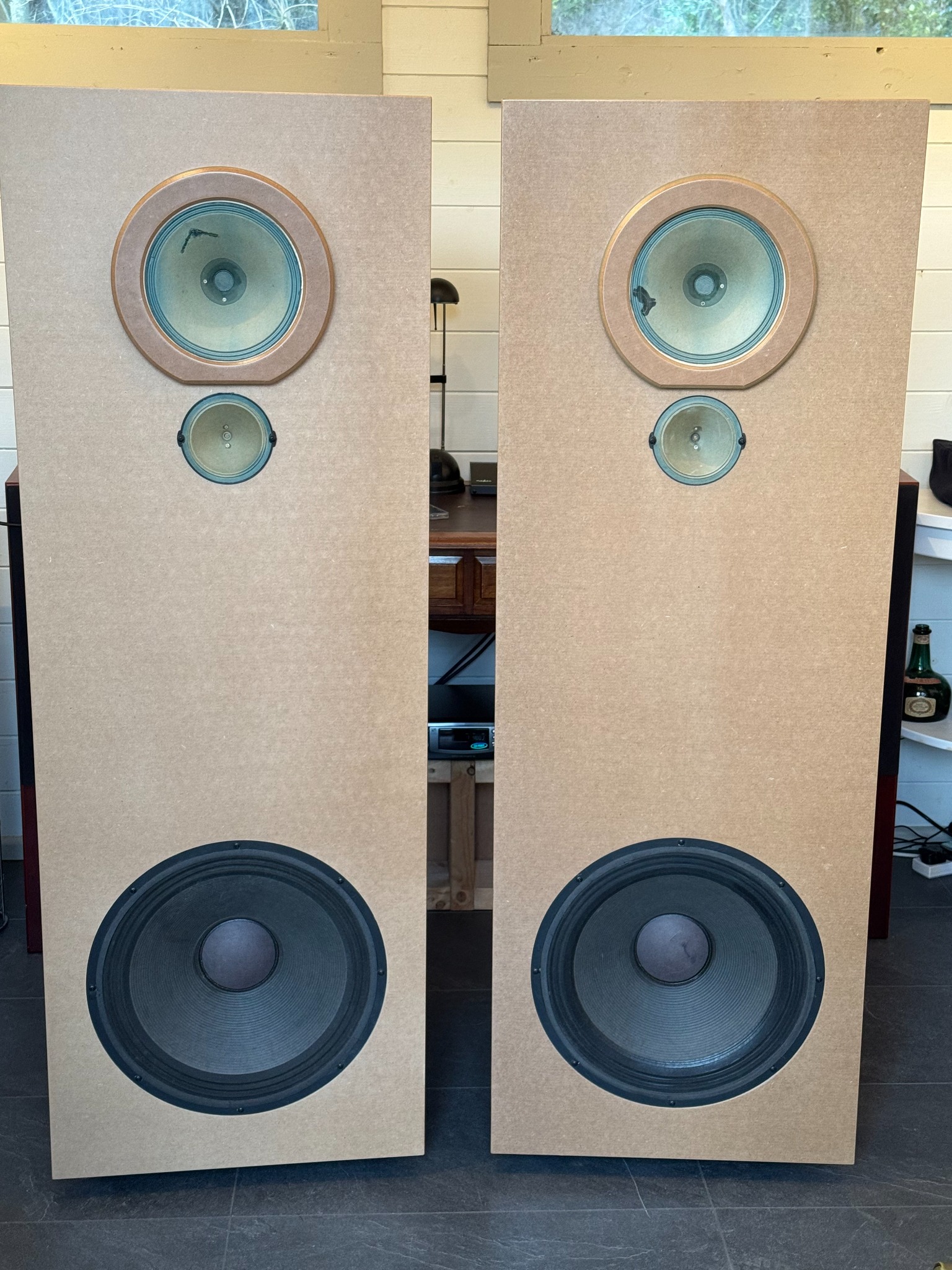
Designed around a feeling, built into a reference.
The finished P17 pair shows the loudspeaker as a complete object: vintage SABA paper-cone mid and high-frequency drivers, a 15-inch McKenzie bass driver, an open-baffle/dipole architecture, substantial MDF construction, hand-built crossover networks and silver-plated internal wiring.
Its importance is not the component list. It is the way the architecture supports the target: human voice with texture and body, bass with scale rather than box pressure, and a spatial presentation that can breathe into the room.
Go inside the design →From the kitchen to the practical laboratory to the listening-room reference.
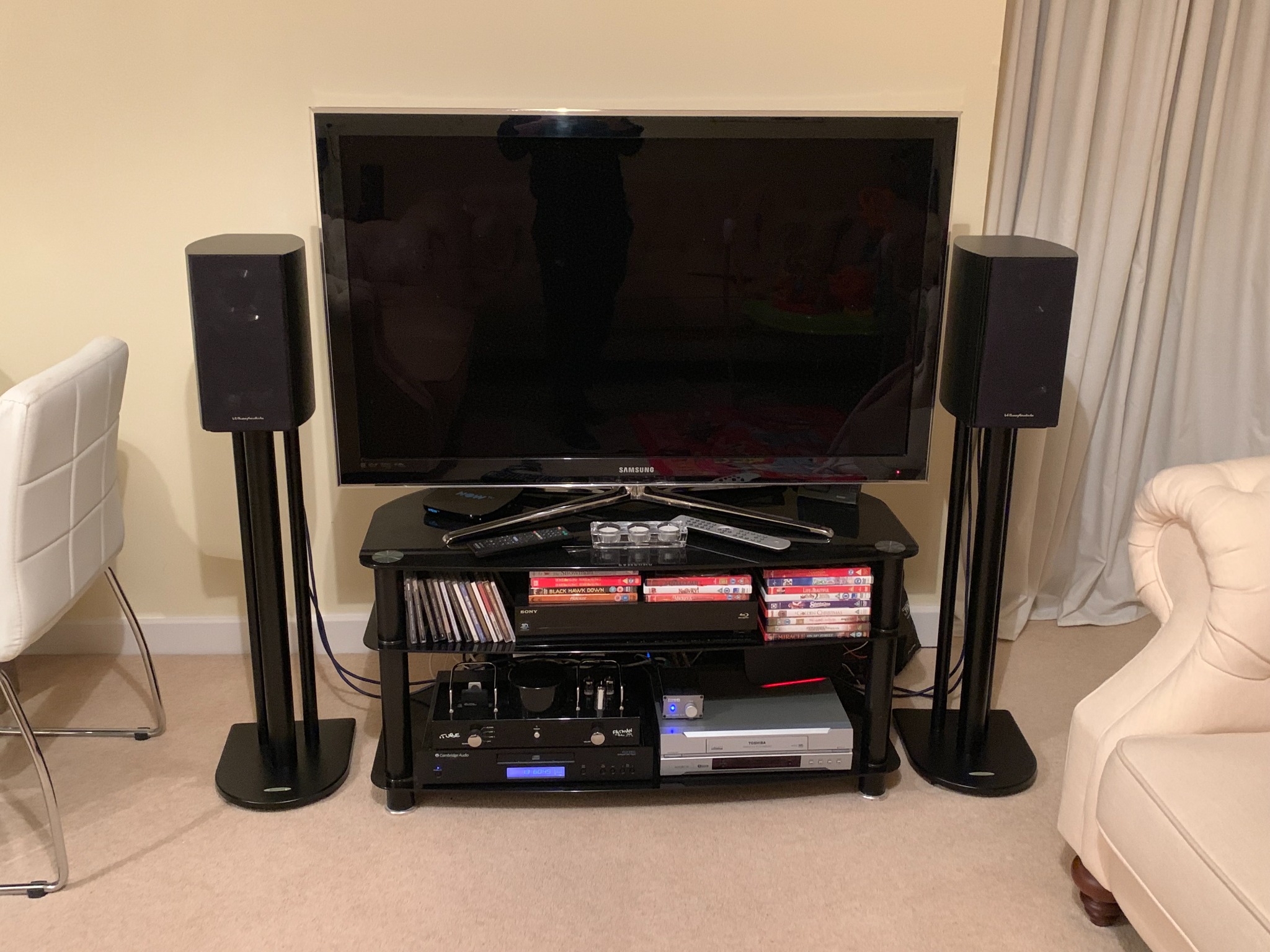
Mini system
The compact expression: Cambridge CD, Fatman hybrid-valve amplification, Wharfedale Diamond 10.1 and deliberately simple system matching.
Explore →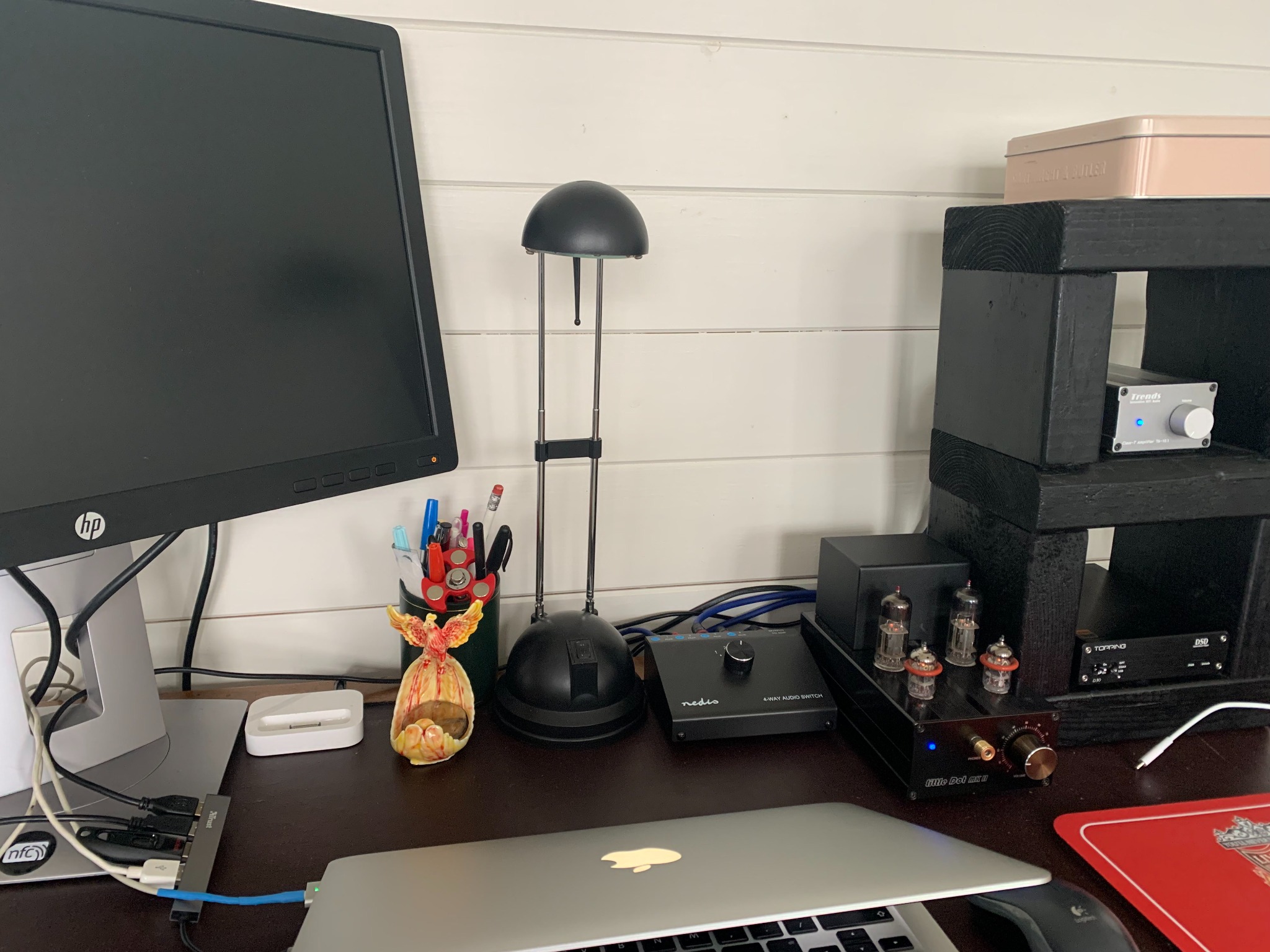
Mid-sized system
The practical laboratory: TDA1549, the first MikroLampizator, Little Dot, D30, Trends Audio, valves, op-amps and repeatable tuning.
Explore →Listening-room reference
P17 is complete. Around it, TDA1541, PCM1798/6N16B, PCM63 and multiple power-stage philosophies form an evolving reference architecture.
Explore the large system →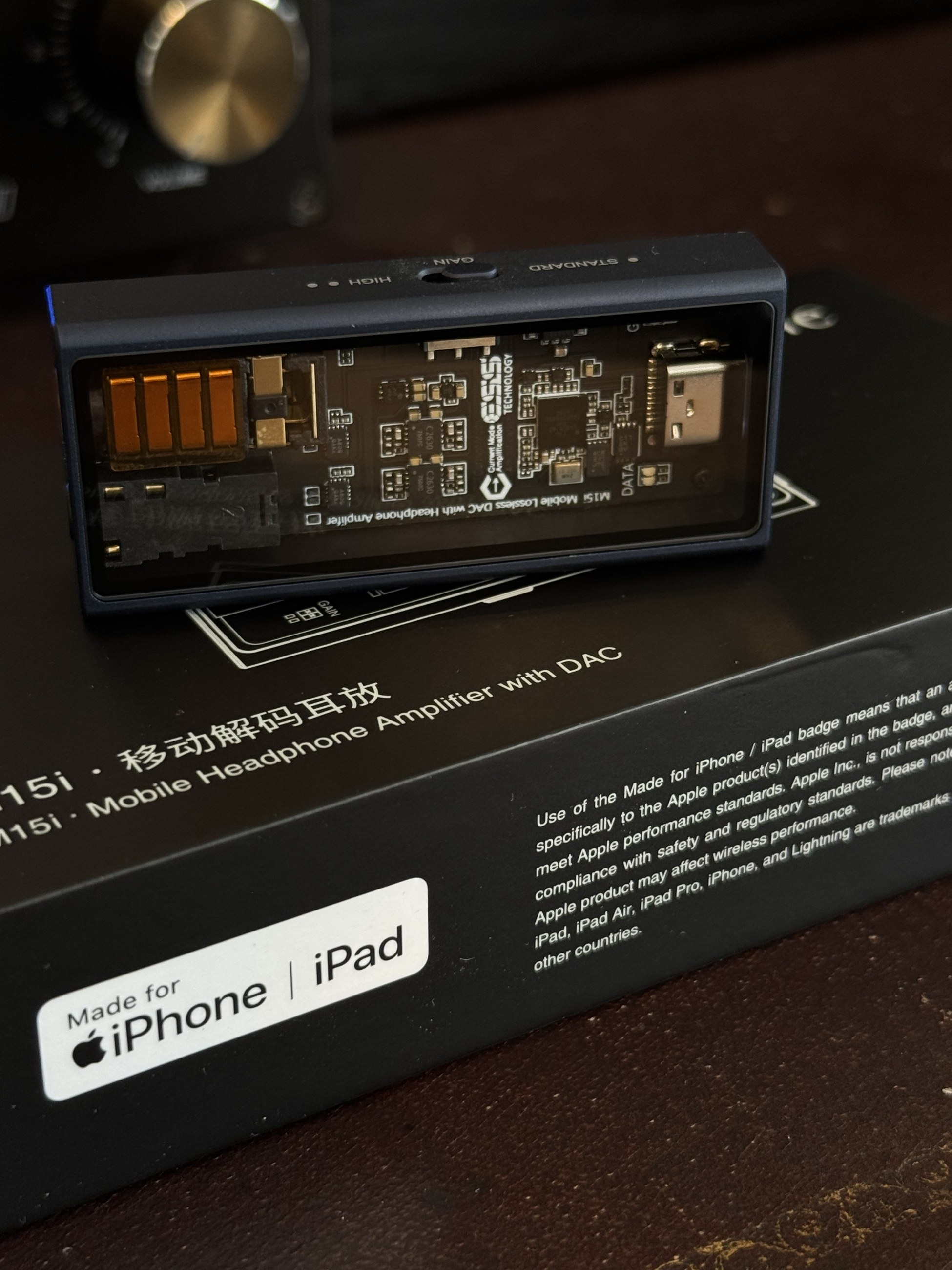
Portable, desktop & headphones.
Portable listening is not the fourth rung of a size hierarchy. It is a parallel laboratory where intimacy, body, stage, amplifier behaviour and source character can be heard at personal scale.
Sony portable CD, modified iPods, MiniDisc, CMOY amplification, Little Dot, Grado, Sennheiser and the Questyle M15i all feed back into the same vocabulary used in the larger systems.
Digital and analogue are implementations, not opposing beliefs.
The mature archive increasingly places the recording and mastering above the carrier. From there, the question becomes how faithfully the source, conversion or phono stage, analogue output, amplification and loudspeaker preserve what was captured.
Conversion is only the beginning.
Multibit and delta-sigma DACs, valves, op-amps, power and complete output stages determine whether digital replay feels structured, human, raw, refined or simply convincing.
Explore digital →The carrier is not automatically the advantage.
Vinyl and tape can preserve exceptional masters and a particular physical relationship with music. The archive also asks when carefully captured analogue material, replayed through a resolving DAC and output stage, can equal or surpass real-time mechanical playback.
Explore analogue →Commission the loudspeaker, not a production-line copy.
A P17 commission begins with the reference architecture and then considers room, system, finish, sourcing and carefully bounded development options.
Independent advice, system optimisation and custom loudspeaker work.
Luke’s HiFi Adventures offers independent HiFi consultancy, high-end audio advisory, system optimisation and bespoke loudspeaker commissions for clients in London, Hertfordshire and across the UK.
Work can range from a focused system consultation or component decision to a complete system review, custom audio project or P17 loudspeaker commission.
Follow the questions behind the equipment.
The original notes are not simply a list of purchases. They form a long-running investigation into what makes reproduced music feel human, dimensional and whole.
The language of sound
Body, air, intimacy, scale, coherence and the difference between stage width and true dimensionality.
Explore the vocabulary →Holography
Why performers need body and depth, not merely precise coordinates in a wide stereo image.
Enter the 3D philosophy →Synergy
Different architectures can belong together when each stage contributes the right proportion.
Read the system logic →DAC architecture
TDA1541, TDA1549, PCM63, PCM1798 and CS4398 as starting points rather than fixed sonic identities.
Explore architectures →Attention & fulfilment
Why a finite library and intentional listening can matter as much as another equipment upgrade.
Read the human end →The documents behind the work
Selected master narratives, dated listening records and build notes that shaped the work.
Open the archive map →A collection of experiments became a design language.
The archive makes more sense as a set of connected threads than as a list of equipment. Each later decision keeps something learned earlier: source implementation, analogue-stage character, power quality, crossover voicing and the relationship between intimacy and space.
From player character to output-stage design
The Sony D-211, TDA1549 CD753, Topping D30 and later DAC research progressively shifted attention from format labels to the complete analogue output that follows conversion.
From volume control to a preamp-centred system
Little Dot preamplification, Trends power-amp mode and the planned 6N16B DAC/preamp all ask the same question: where should gain, volume and character live in the chain?
From accessories to architecture
The iFi-fed D30, battery ideas, supercapacitor amplification research and the detailed 6N16B C-L-C-R-C supply turned power from an afterthought into part of implementation.
From room tuning to P17
Removing Monitor Audio port plugs was a small lesson in stored energy and room interaction. P17 became the large-scale expression: open radiation, paper continuity, dipole bass and a crossover developed by listening.
From one-component swaps to whole-system proportion
Russian, Mullard and GE valves, multiple op-amps and three crossover-capacitor tiers became ways of learning when more body, air or resolution helps the whole musical event.
From access to intentional listening
The Living Library and portable work eventually asked a different question: once the system is good enough, how do you preserve attention, ritual and emotional connection to music itself?