Mini kitchen system
A reminder that musicality does not require complexity. The brief is Bluetooth and CD playback with enough valve character, proper loudspeaker support and sensible cabling to make everyday listening worthwhile.
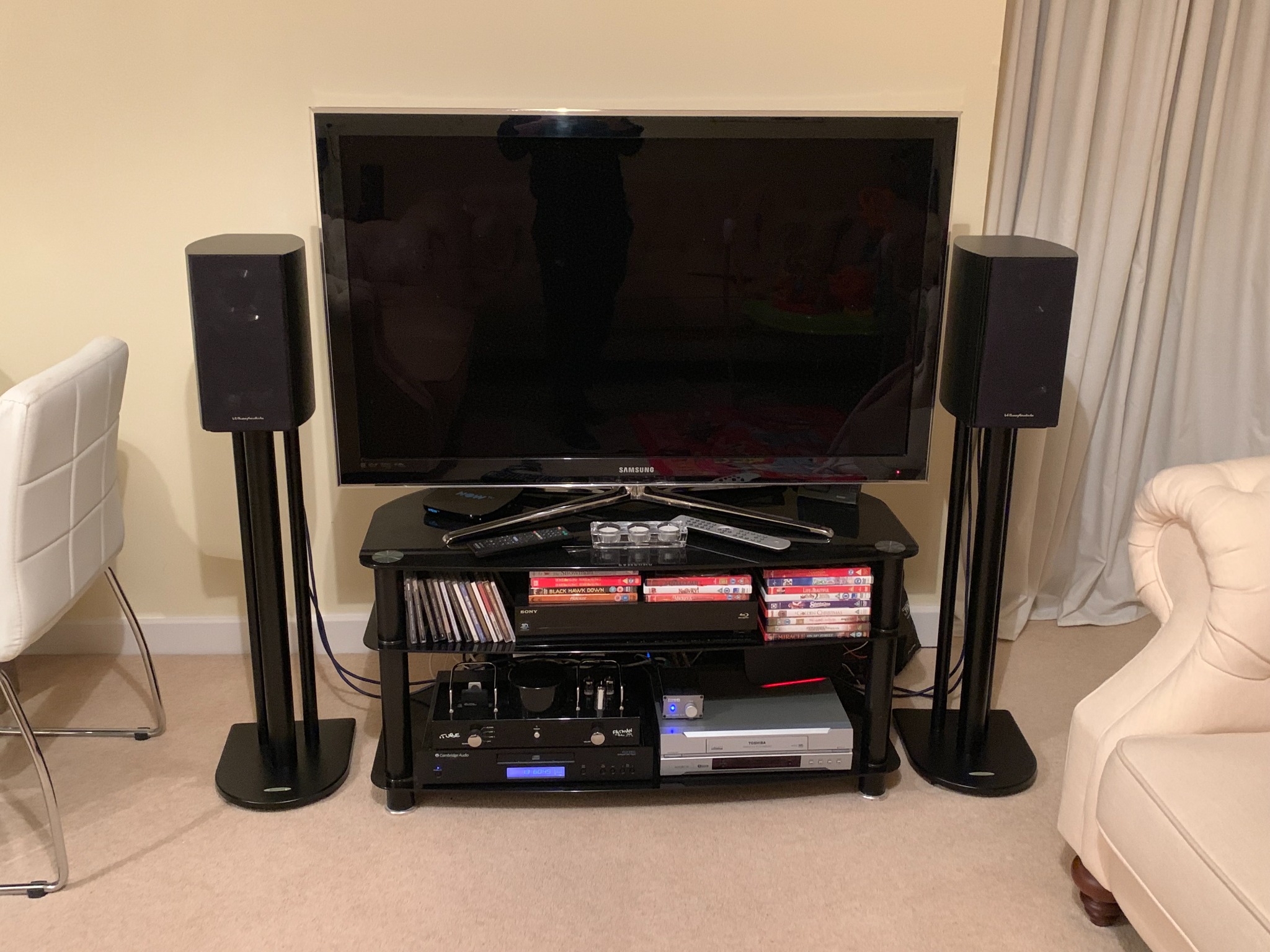
Small system, deliberate choices.
The listening notes after the valve change focus on bass, intricacy, presence, involvement and a larger sense of depth. That is the larger philosophy in miniature: one change should improve the feeling of the whole system, not merely add a hi-fi effect.
A small system can still have a philosophy.
The Cambridge 640C, Fatman Carbon 2 and Wharfedale Diamond 10.1 combination was not asked to imitate the scale of the listening-room project. It was asked to remain enjoyable, useful and musically involving within a smaller role.
Valve rolling showed that even here the same vocabulary applied: bass, intricacy, presence, depth and involvement. That continuity across budgets is central to the advisory philosophy.
Small changes were still judged as system changes.
The Cambridge Audio 640C V1 remained stock. Bluetooth and iPod playback arrived through the Fatman/Layen path, keeping the system useful rather than purist for its own sake.
The stock valves gave way to matched Russian military-grade 6N2P replacements. The direct note was more bass, intricacy, presence, involvement and feel. A later gold-pin pair was heard as slightly larger, deeper, more musical and clearer.
Wharfedale Diamond 10.1 loudspeakers sit on 70 cm Atacama i7 stands filled with sand. Mechanical damping was part of the system rather than an accessory bought after the electronics.
Chord C-Screen interconnect and speaker-cable choices were kept proportionate to the role of the system. The point was not to make the kitchen chain imitate the reference room.
The lesson was already there: improve the whole musical impression, not one spectacular hi-fi trait.
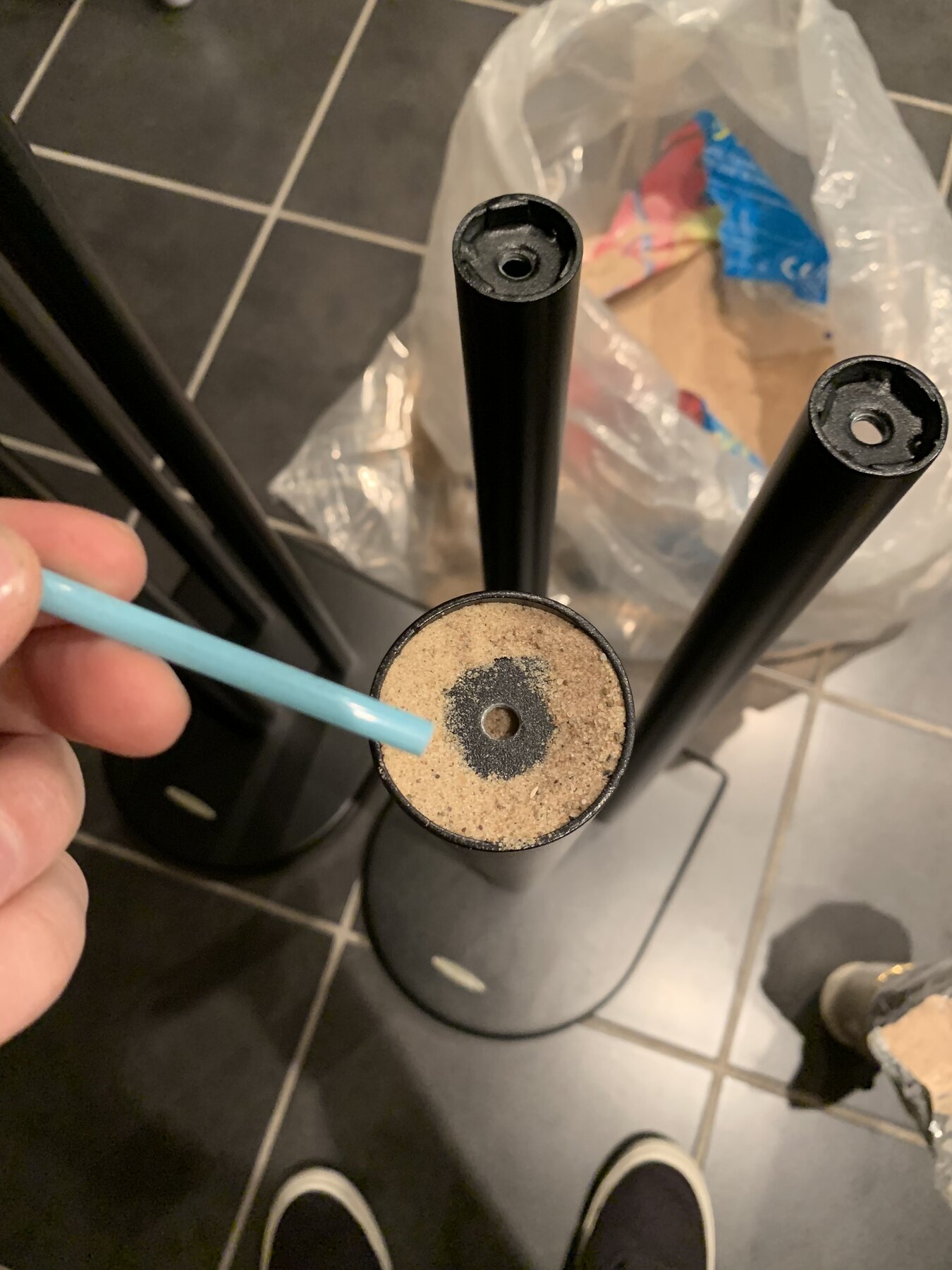
The Atacama i7 stands were sand-filled as part of the system setup rather than treated as furniture.
The progression was physical as well as electronic.
The Mini system became a compact lesson in mechanical support, valve substitution and sensible source matching.
Wharfedale + Atacama
The Diamond 10.1s moved onto 70 cm Atacama i7 stands and the columns were sand-filled for greater damping and stability. The point was not a boutique accessory exercise; it was to give the loudspeaker a predictable mechanical reference.
Fatman Carbon 2
The stock valves were replaced with matched Russian military-grade 6N2P types. The listening note records more bass, intricacy, presence and involvement. A later gold-pin set was heard as slightly larger in stage and depth.
Source hierarchy
Cambridge 640C, Bluetooth and iPod connectivity keep the system useful without asking it to become the reference room. The Mini remains proof that coherent choices at modest scale can still express the wider philosophy.