Listening is a method, not a mood.
The archive became useful when immediate reactions, technical research and later re-listening were allowed to challenge one another.
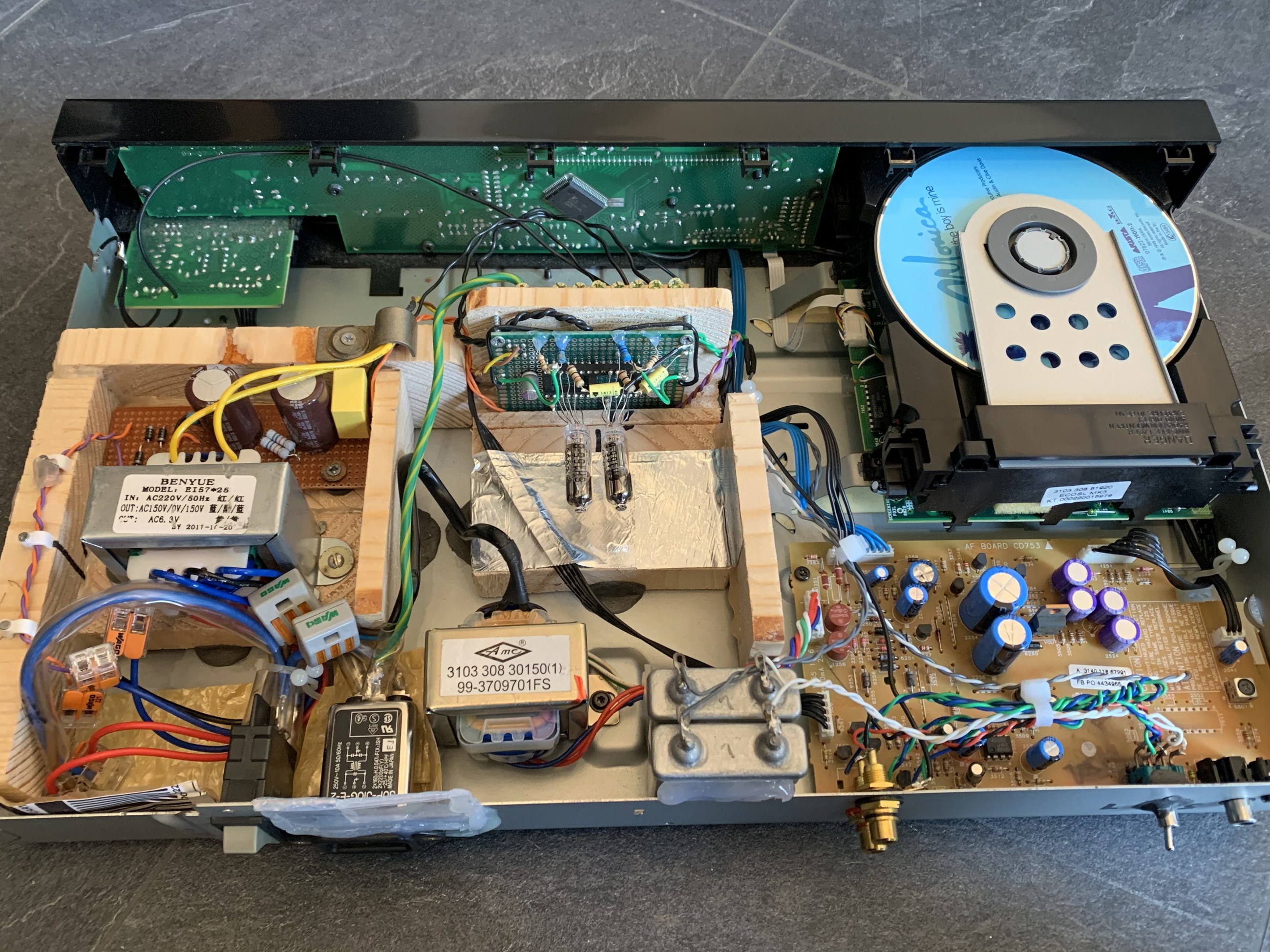
Start with the circuit, then read the listening patterns.
Reviews are useful when their descriptions converge and when the system context is understood.
The method looks past simple rankings. DAC architecture, analogue stage, power supply, impedance, valve operating point, crossover topology, driver behaviour, cabinet geometry and room interaction are all potentially more important than the badge on the front.
Subjective language is treated as imperfect but useful data. If several experienced listeners independently describe body, edge, air, scale or timing in similar ways, that becomes a hypothesis worth testing rather than a fact to repeat.
Never judge the part as though the system disappeared.
Whole before parts
First ask whether the music holds together. Only then zoom into bass, treble, imaging, decay or texture.
Contradictions are useful
Warm yet transparent. Intimate yet spacious. Detailed yet non-fatiguing. The most convincing equipment often resolves apparent opposites rather than choosing one.
Emotion is evidence
An emotional response is not a laboratory measurement, but it matters when the purpose of the system is to communicate a performance.
Words become more useful when they mean something repeatable.
Across years of notes the same descriptors recur, allowing a personal vocabulary to emerge.
- Body
- The sense that a voice or instrument has physical substance rather than existing as an outline.
- Air
- Low-level spatial and upper-frequency information around sounds, not simply extra brightness.
- Holography
- Stable placement with depth, body, ambience and believable relationships between performers.
- Coherence
- The ability to hear individual information without the performance fragmenting into Hi-Fi effects.
- Inner light
- A recurring shorthand in the notes for low-level atmosphere and illumination without glare.
A conclusion is a reference point, not a prison.
The archive is deliberately chronological. First impressions are preserved, then later listening is allowed to deepen, qualify or overturn them.
Direct experience in Luke’s own system, preserved with dates wherever possible.
A build or modification path with enough design work to be concrete, but not yet a finished listening reference.
Research, hypothesis or future direction. Interesting, but not presented as an achieved result.
Subjective fidelity needs boundaries.
Room and placement
A loudspeaker result is inseparable from position, room dimensions, listening distance and programme material.
Implementation
A DAC chip or valve type does not possess one universal sound. Circuit, power, loading and the rest of the chain matter.
Memory
Human auditory memory is imperfect, which is precisely why dated notes and repeated comparisons are valuable.
Preference
The target is not to disguise preference as objective truth, but to make the preference articulate enough to build around.
Listen, name the change, cross-check it, then let time disagree if necessary.
Record the first reaction
The early note often captures immediacy better than a polished review: “more body”, “opened the soundstage”, “made me cry”, “the songs feel like stories”.
Change one layer when possible
Valve family, op-amp, power supply, speaker port, pads or preamp insertion can each reveal a specific relationship while the rest of the chain remains familiar.
Cross-check on another transducer
Headphones, speakers and portable chains expose different things. A change that only sounds “better” on one pairing may be synergy rather than a universal improvement.
Revisit after familiarity
The notes repeatedly update earlier impressions. This is why the site preserves dated progression rather than collapsing everything into the latest conclusion.
Separate build from research
The PCM1798/6N16B documents are allowed to be detailed without being called a listening result. That distinction keeps the archive useful when theory eventually meets hardware.
Judge the whole musical event
The final question is not whether a component produced more detail, warmth or width. It is whether the track became easier to inhabit as a complete performance.