A decade of ideas becoming systems.
The story matters because P17 did not appear as a product concept. It grew out of years of listening, modifying, documenting and learning what qualities repeatedly survived across very different systems.
From idea to reference.
The P17 idea takes hold
A long-running ambition forms around open-baffle scale, vintage SABA green cones and a loudspeaker that prioritises human presence over conventional box-speaker presentation.
Portable CD becomes a reference lesson
The serviced and recapped Sony D-211 reinforces a pattern: implementation, output stage and recording quality can matter more than a modernity hierarchy. Natural tone, timing and live presence become recurring criteria.
Valves enter the digital chain
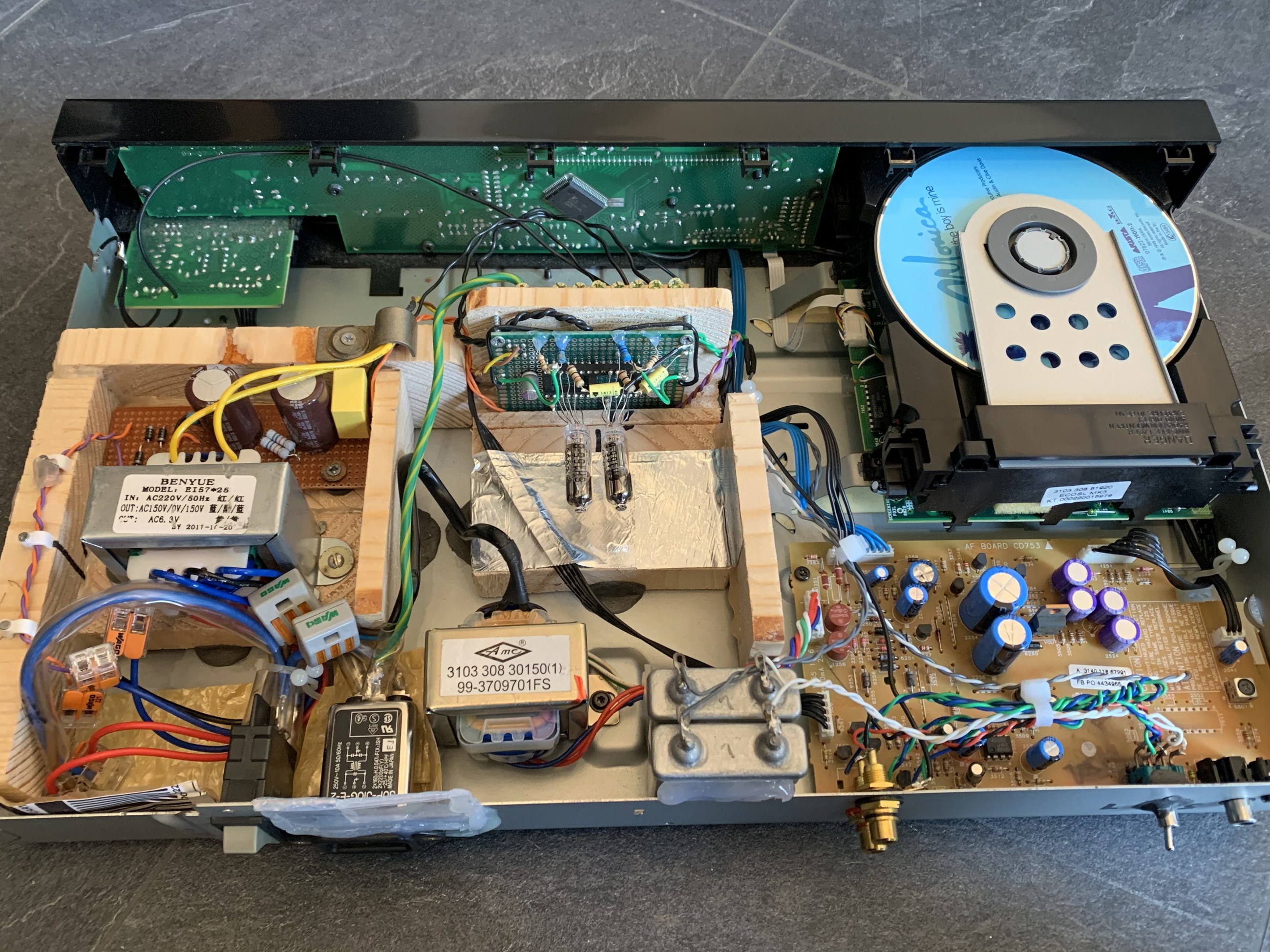
The Philips CD753 with TDA1549 and a hand-built MELZ 6N16B-V SRPP MikroLampizator stage is completed in October. The notes describe it as organic, dynamic, real, truthful and non-fatiguing.
The drivers play together
Before the final cabinet exists, the P17 test rig produces the first proof of concept: live, authentic, controlled and revealing, with vocals immediately singled out as exceptional.
Tube rolling, op-amps, power and synergy
Little Dot MKII tube combinations, Topping D30 power supply and op-amp changes, vinyl experiments, iPod modifications and multiple headphones turn the mid-sized system into a repeatable listening laboratory.
The physical speaker arrives
36 mm front baffles and 18 mm rear structures transform years of loose-driver experimentation into a substantial 1.2 metre loudspeaker.
“They feel like living creatures.”
The first assembled listening note describes width, depth, immersion and visceral bass, but the most important response is emotional rather than technical.
The crossover is installed
With the final crossover boards mounted and silver-plated wiring in place, the project reaches its reference state. The diary records: “The songs feel like stories.”
The reference architecture expands
PCM1798 + 6N16B, PCM63, TDA1541, direct-heated valve amplification, capacitor routes and system architecture are researched as future branches. They are presented as development, not as completed fact.
The same target fits in a pocket
The Questyle M15i Blue becomes another useful reference for the same vocabulary: fuller vocals, depth, harmonic wholeness, immersion and desktop-like scale.
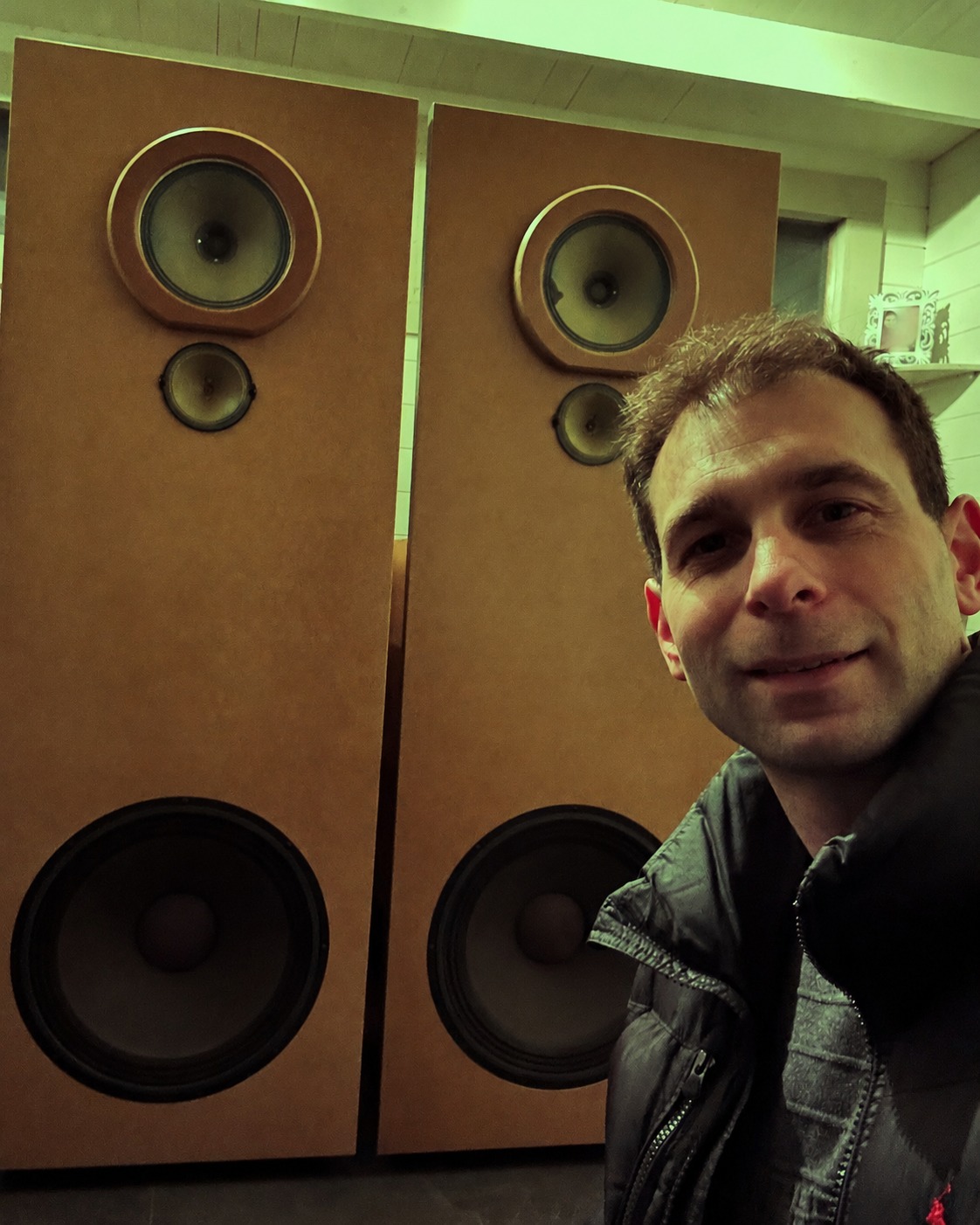
The completed P17 pair: a long-running idea made physical.
The journey is visible in the finished object.
The P17 is useful as more than a flagship loudspeaker. It gathers together lessons from years of listening to source architecture, valves, power supplies, crossover choices, spatial presentation and the difference between impressive sound and believable music.
Its scale also makes the journey tangible. What began as notes and hypotheses eventually became a pair of full-size reference loudspeakers that could be judged against the same language used throughout the archive: body, presence, coherence, depth, air and emotional connection.
Projects cross-pollinate.
The P17 informed the search for scale and holography. Valve output stages informed the search for vocal body. Headphones made differences in micro-detail and spatial layering easier to hear. Portable sources challenged assumptions about price and age.
Those connections are preserved rather than forcing the archive into separate equipment categories.
The archive shows hypotheses becoming references.
Some ideas appear years before the hardware that eventually tests them. That is part of the journey rather than an embarrassment to hide.
The P17 concept begins as a long-term loudspeaker ambition.
Portable CD, iPod, Grado and valve experiments sharpen the vocabulary around realism, body, air and intimacy.
The Philips CD753 MikroLampizator is completed, providing a direct reference for what a transformed analogue output stage can do.
P17 moves from loose driver testing to final cabinet, crossover and completed listening reference.
System narratives become more architectural: PCM63, PCM1798/6N16B, power stages, capacitor paths, recording and fulfilment are considered as one ecosystem.
Portable listening with Questyle feeds back into the same mature target: body, intimacy, openness, dimensionality, speed and coherence.
The equipment changed. The questions became more precise.
Complete output stages
The recapped D-211, later iPod/CMOY combinations and the CD753 showed that DAC chip, analogue stage and amplifier behaviour cannot be separated cleanly in listening.
Valves as structure, not decoration
Little Dot tube rolling and the first MikroLampizator gradually moved the valve question away from “warmth” and towards gain, current, dimensionality, noise and how one stage hands music to the next.
P17 from idea to reference
The November 2022 loose-driver test, February 2025 cabinet listening and March 2025 completed crossover created a direct acoustic reference against which upstream ideas could be judged.
Master-system research
PCM63, TDA1541, PCM1798/6N16B, transformer and power-stage documents did not replace earlier thinking. They organised it into branches: emotional source, structural source, hybrid DAC/preamp and power-stage choices.
Portable listening closes the loop
The M15i Blue work explicitly mapped new portable choices back to Mullard intimacy, GE air, Russian balance, OPA445 grounding and the P17 preference for hearing the whole track rather than isolated effects.
Build, then rewrite the theory
The PCM1798/6N16B project remains deliberately unfinished. Its detailed power, input, coupling and control plans become hypotheses to test, not conclusions to advertise before the circuit exists.
The later chronology is carried by named working documents rather than a single retrospective story.
By 2026, progression no longer means replacing the previous answer.
The later master documents change the shape of the journey. Earlier experiments are reclassified as roles rather than discarded as obsolete.
M15i Blue arrives
A modern USB DAC/amp adds body and scale, but the iPod/Askew and D-211 chains remain intentionally different references.
D30 / OPA445BM returns to centre
What had been a computer DAC becomes more important once its analogue stage and power supply are developed and it feeds the Little Dot.
Future branches become more precise
The PCM1798/6N16B, TDA1541 Sony, PCM63/M24 and power-stage plans move from shopping lists into explicit architectures with roles and test criteria.
P17 remains the listening authority
The completed speaker prevents research narratives from becoming self-fulfilling: future electronics have to improve the actual musical event through the real reference pair.