Start with the sound you are trying to feel.
The advisory work applies the same method behind the systems and P17: define the listener’s target, understand the existing chain, identify the bottleneck, and spend where the change is most likely to be audible and meaningful.
Available for private HiFi consultation, system optimisation, component selection and high-end audio advisory for clients in London, Hertfordshire and across the UK.
Three ways into the same listening method.
System consultation & design
Build or reshape a system around room, music, listening habits, budget and desired presentation rather than magazine hierarchy.
Optimisation & upgrades
Find the part that is actually constraining the system: source, analogue stage, amplification, loudspeaker placement, power, tubes, op-amps or crossover work.
Analogue & digital
Work across CD, files, streaming, vinyl and tape without assuming one format owns musical truth.
Words are useful when they point to experience.
“More detail” can mean several different things. So can “warm”, “open” or “analogue”. The first job is translating those words into a more precise sonic target.
That may involve midrange balance, image density, output-stage character or room interaction, not simply more volume at 1 kHz.
Width without depth can sound spectacular but flat. Placement, phase behaviour and ambience retrieval all matter.
The real need may be body and harmonic completeness rather than rolled-off treble.
Lower noise and better separation can reveal information without making the presentation clinical.
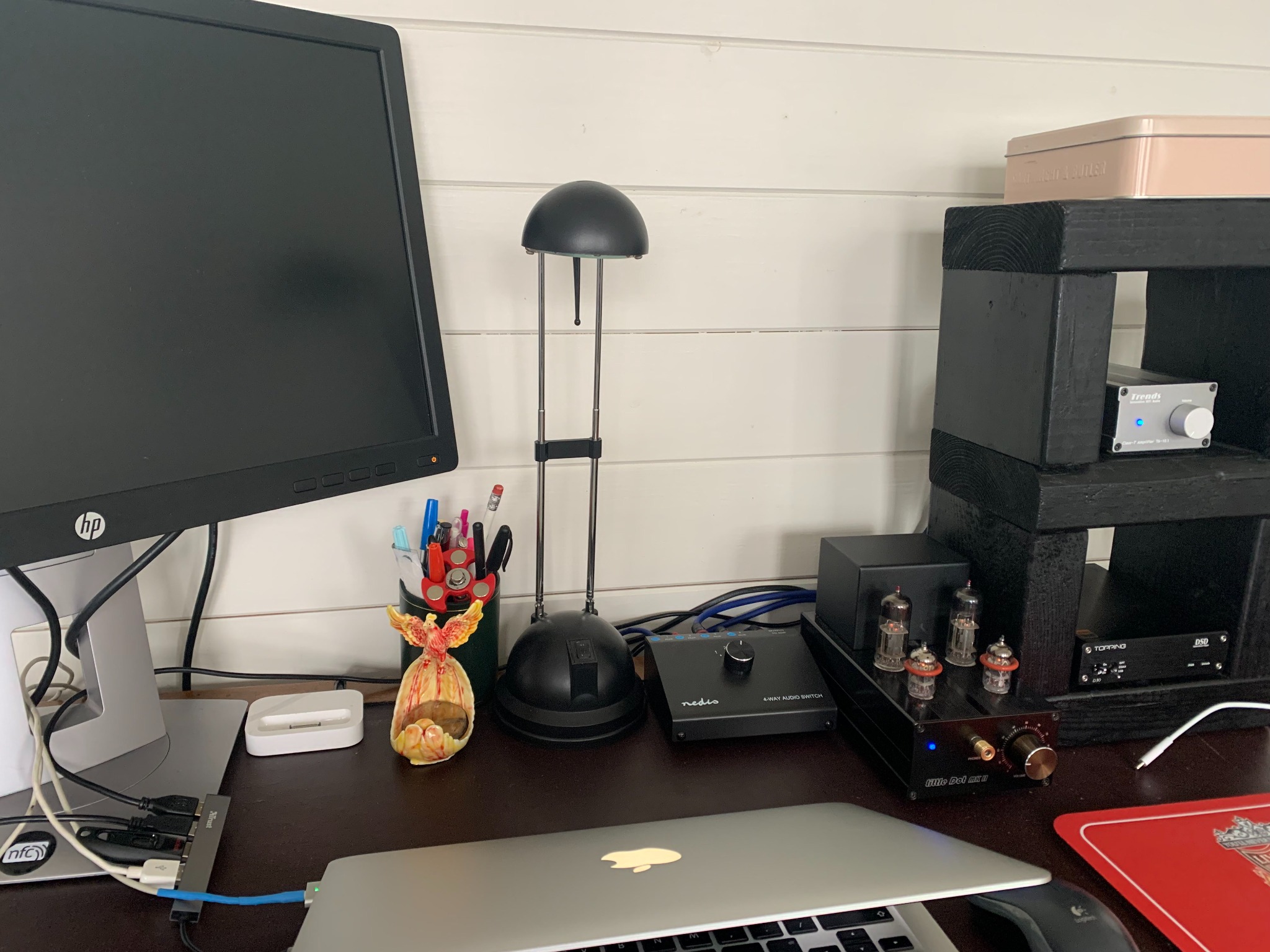
All budgets can benefit from intelligent choices.
A Russian valve substitution, removing a speaker port plug, bypassing an unnecessary volume control, a low-noise power supply or simply changing the source/mastering can matter more than buying the next component in a price ladder.
The archive is valuable because those decisions were documented across cheap, mid-priced, vintage, modified and aspirational equipment.
Describe the experience before naming the upgrade.
The advisory method begins by translating what the listener feels into a usable system target.
| Client says | Could actually mean | Questions to test |
|---|---|---|
| “I want warmer sound” | More body, less glare, closer vocals, softer edge or better mastering | Does the problem occur on every recording? Which frequency region feels wrong? |
| “I want more detail” | Lower noise, better transient definition, stronger separation or simply more treble | Are low-level details missing, or merely hard to follow because the system is congested? |
| “The stage is too small” | Speaker placement, room reflection, channel balance, phase or recording limitations | Is width missing, depth missing, or are image bodies too large? |
| “Vocals are distant” | Midrange balance, stage perspective, room energy or source/output-stage character | Do voices lack level, body, focus or emotional presence? |
Diagnosis comes before shopping.
The system history contains many examples where the meaningful change was not the most expensive change. That becomes a practical method for somebody else’s system.
Speaker port before speaker replacement
Removing the Monitor Audio rear port plugs opened the soundstage dramatically. A room/setup variable solved a problem that could easily have been misdiagnosed as needing new speakers.
Architecture before amplifier upgrade
Bypassing the Trends Audio volume control when an upstream preamp was already present simplified the chain and clarified the role of each stage.
Power before DAC replacement
The D30’s iFi supply materially changed the listening impression before the DAC itself was replaced. That is why power, grounding and implementation belong in the diagnosis.
Mastering before format
A bright or compressed recording cannot be repaired by buying a warmer DAC. Sometimes the correct recommendation is a different master or source version.
Voicing by proportion
Mullard, GE and Russian valves each proved useful because they changed different proportions of intimacy, air and balance. The right answer depends on what the rest of the chain already supplies.
State the evidence level
Built/heard results, researched hypotheses and future build ideas are kept separate. Advisory should be equally clear about what is known, what is likely and what needs an experiment.
A recommendation is stronger when it can be traced back through failed, partial and successful routes.
The working method now has examples at almost every scale: speaker placement before hardware, maintenance before replacement, power supply before DAC replacement, output stage before format assumptions, and system-role thinking instead of one-dimensional upgrade ladders.
“More detail” may really mean lower noise, closer vocals, more ambience or sharper leading edges. The archive gives each word a history of actual comparisons.
Do not spend on the most prestigious component if room placement, gain staging, a dirty pot or an unnecessary second volume control is the real constraint.
Rawness, warmth, air and body can each be assets or excesses. The aim is not to neutralise every component into sameness.
A portable system, home headphone chain and reference loudspeaker room can legitimately use different architectures because they solve different listening situations.