Reference loudspeaker • by commission

P17

A 1.2 metre loudspeaker built around vintage SABA paper cones, a 15-inch McKenzie bass driver, dipole/open-baffle behaviour and a hand-built crossover. The specification matters. The reason it exists matters more.

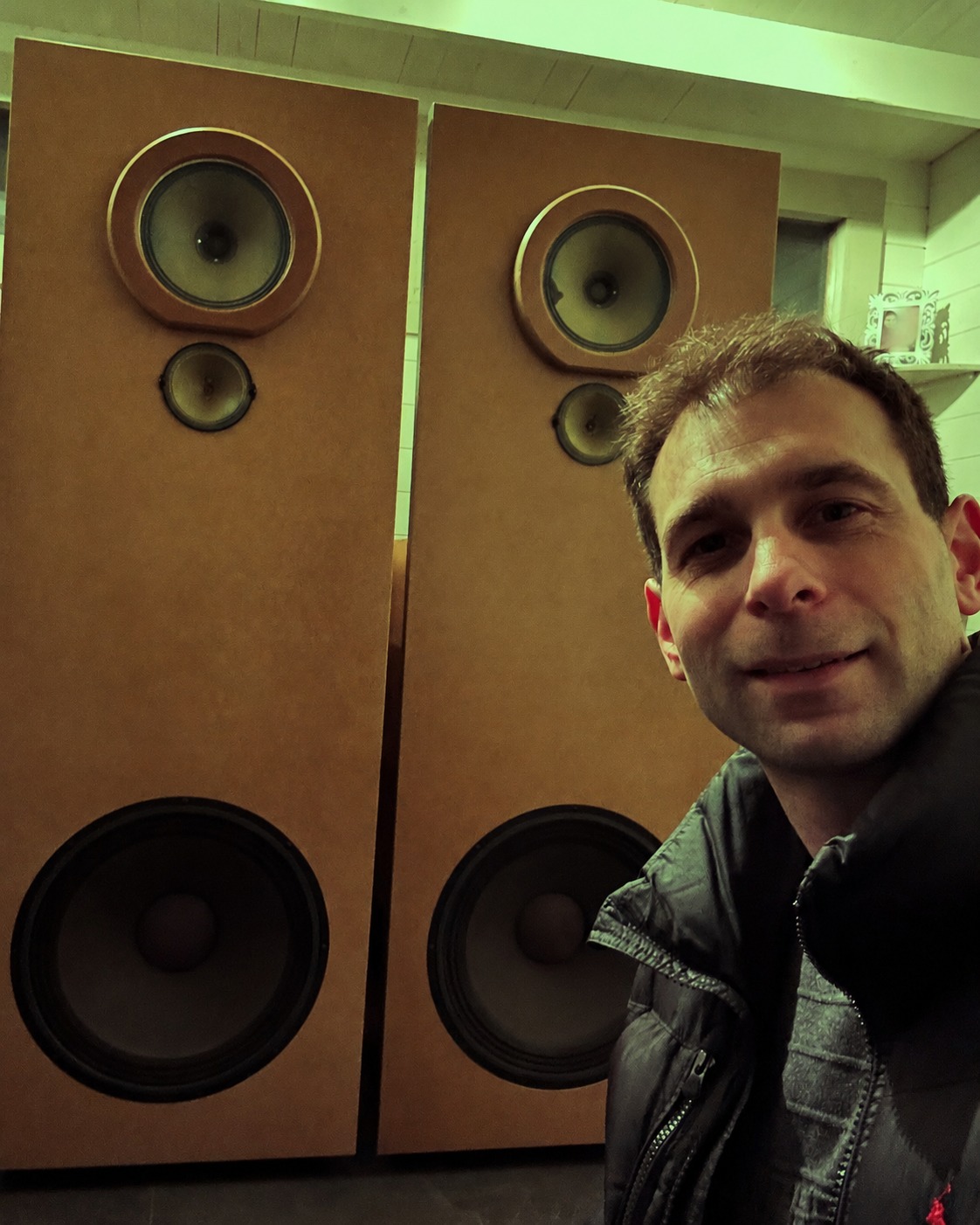
Luke with the completed P17 reference loudspeakers

The completed P17 reference pair with Luke, showing the physical scale of the 1.2-metre loudspeakers.

A dream since c. 2010

Built without a commercial brief.

There was no target retail price, no requirement to make the cabinet small, and no need to choose drivers because they were easy to source at production scale.

Seen alongside its builder, the proportions become clearer: the P17 was never reduced to suit a conventional domestic product brief. The large radiating surfaces, open architecture and tall baffle are part of the acoustic idea, not styling added afterwards.

The reference pair was allowed to become what the listening goal required: unusually large bass radiating area, vintage paper drivers for the human range, an architecture that lets the rear wave participate in the room, and crossover work built slowly enough to listen to the consequences.
Reference pair completed 5 March 2025Personally built & heard
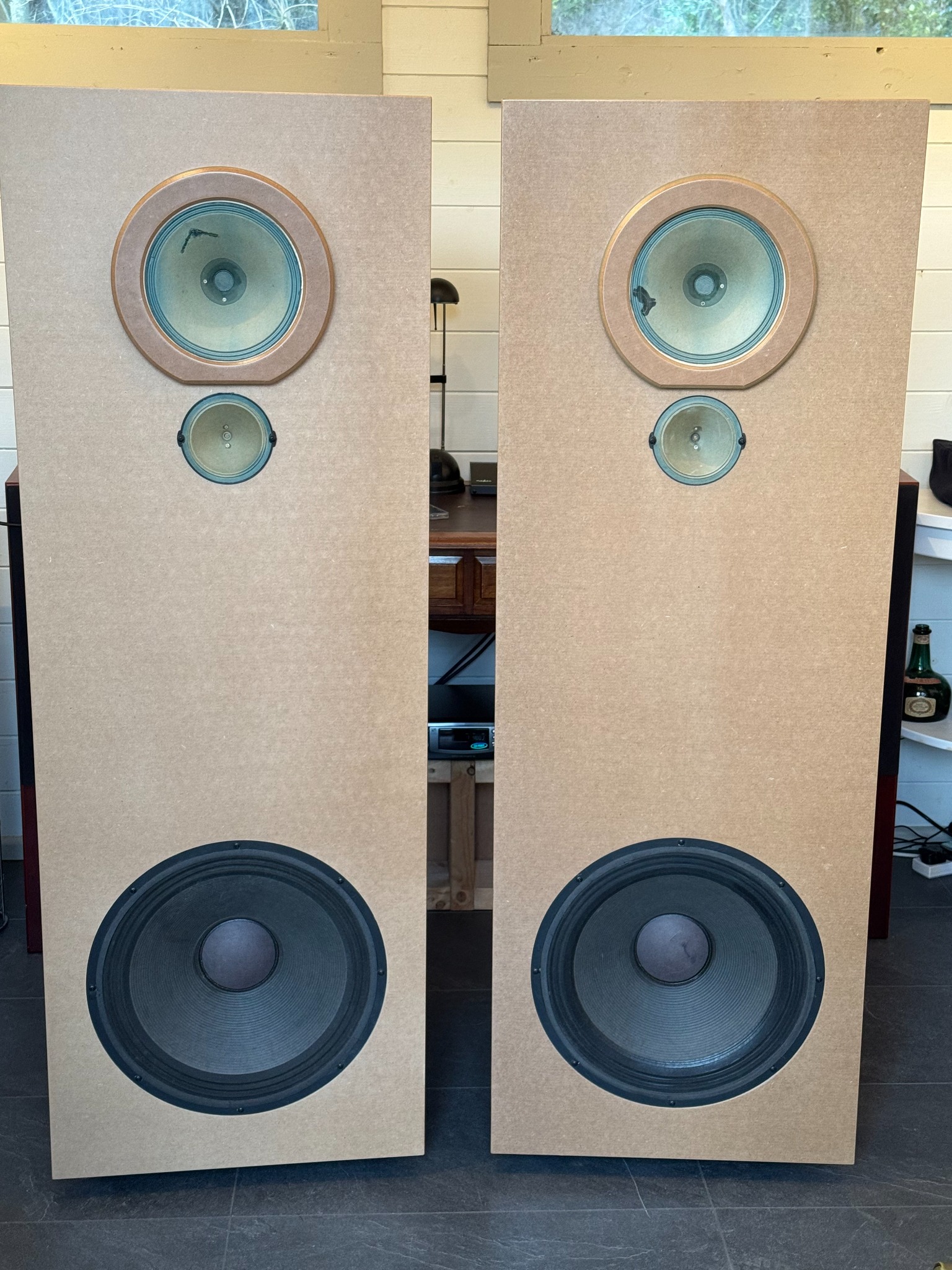
Completed P17 loudspeakers, final photograph

The completed P17 loudspeakers in the listening room, shown as the finished reference pair.

Finished pair

Large on paper. Coherent in the room.

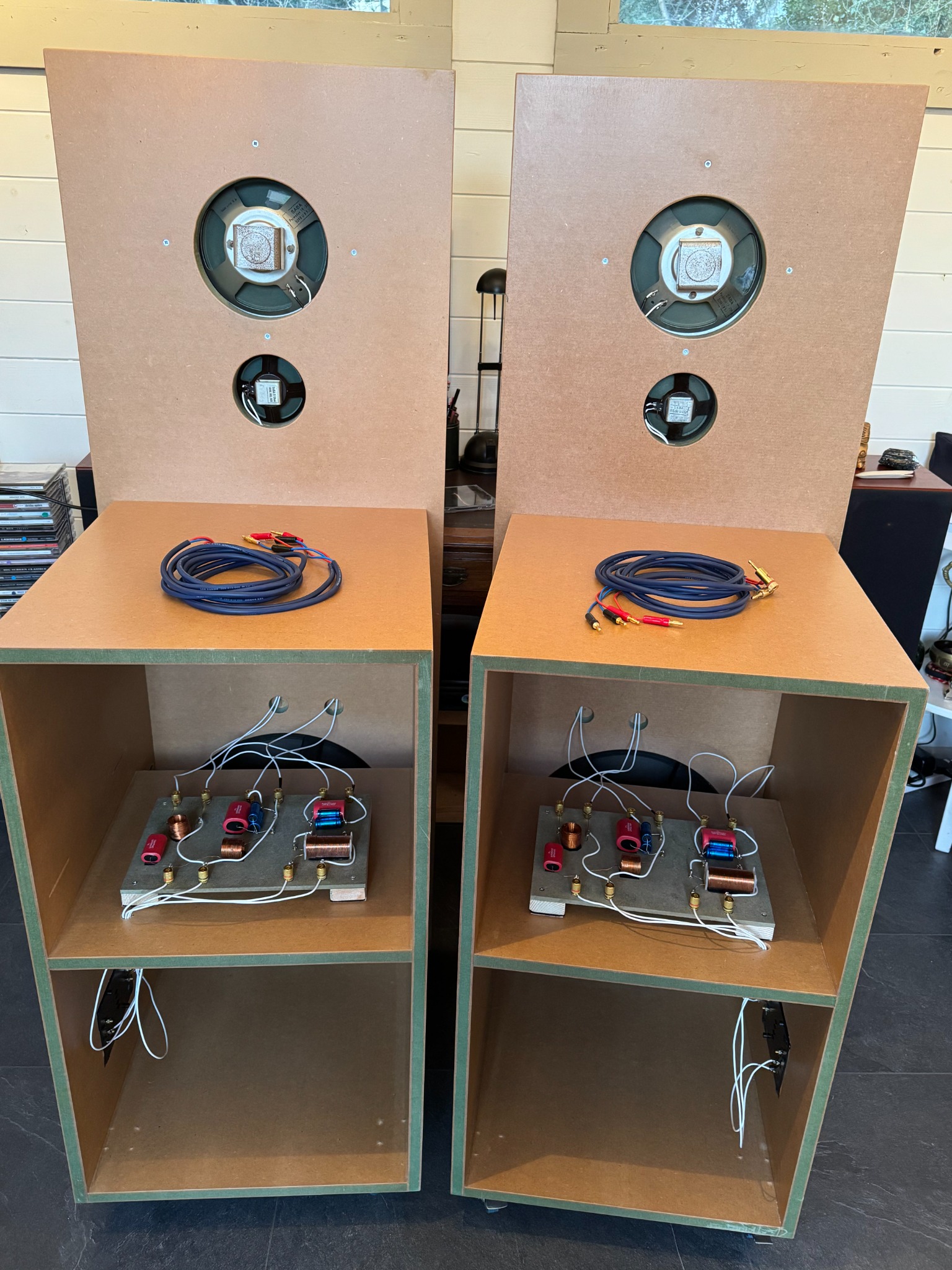
A 1.2-metre loudspeaker with 15-inch bass drivers has a physical presence that specifications alone do not communicate, but the finished pair also shows how the architecture resolves visually and practically in the listening space.

The photograph is intentionally part of the real archive. It shows the speaker as a complete object rather than an abstract concept: the cabinet proportions, the driver layout and the sense that the project is both ambitious and domestically real.

Together, the human-scale and finished-pair photographs communicate both things that matter: what the P17 is, and how large-scale reference ideas translate into a real completed loudspeaker.

The diary, not retrospective marketing

Three moments in the build.

“Very live, realistic, authentic, accurate, controlled, revealing and energetic… the vocals are incredible.”30 November 2022 • first wired test
“They feel like living creatures. Sound is so wide, deep, immersive, emotional, and real… Made me cry.”7 February 2025 • first assembled listen
“All the necessary parts are there but I’m not focussing on them as much as I am the piece of music… The songs feel like stories.”5 March 2025 • completed crossover
Reference architecture

Large surfaces, light paper, hand-built networks.

HeightApproximately 1.2 metres
MidrangeVintage SABA green-cone open-basket 20 cm paper driver, 5 Ω
High frequencyVintage SABA green-cone open-basket 10 cm paper driver, 5 Ω
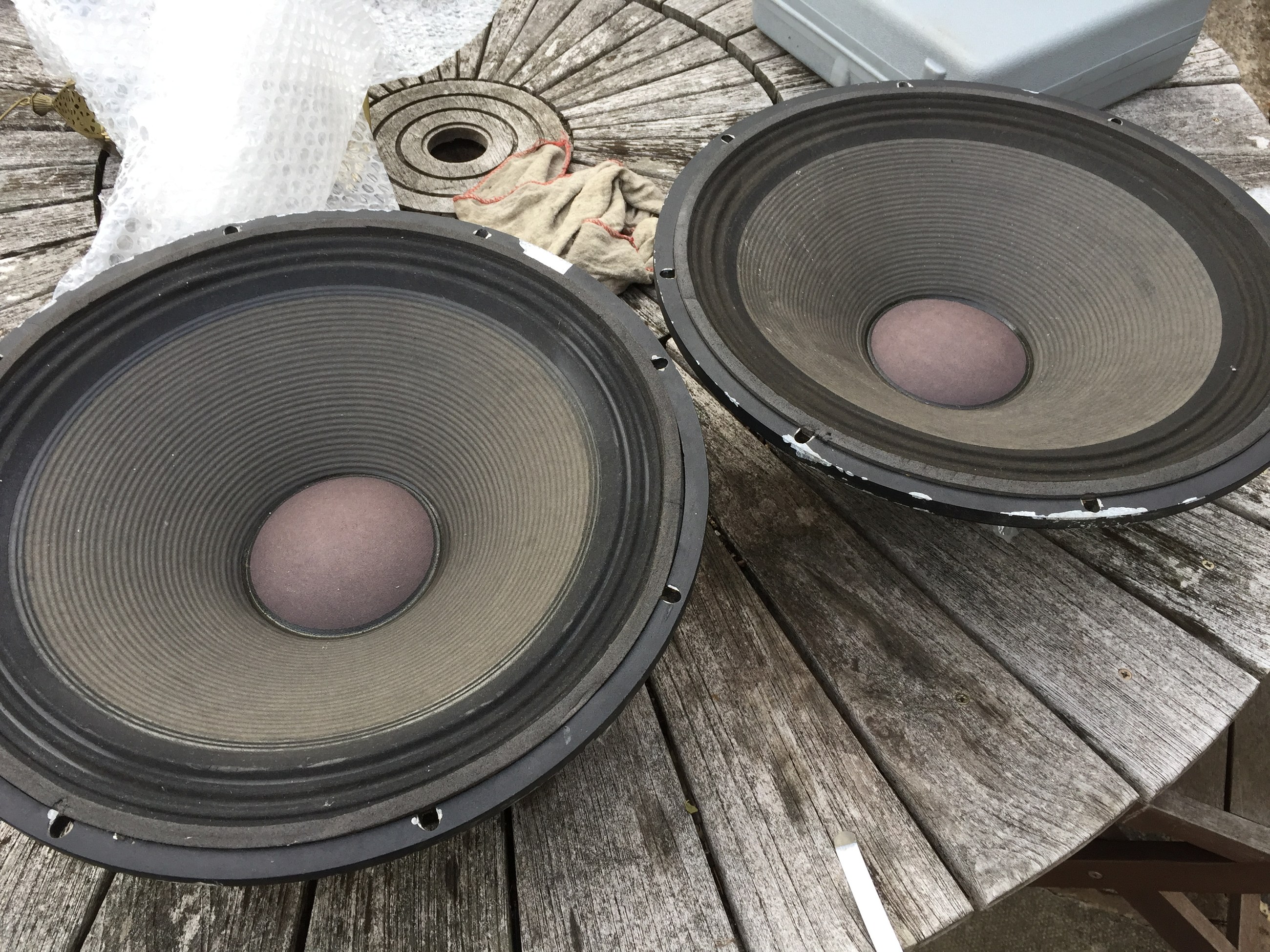
BassMcKenzie 15-inch driver, 8 Ω, operating into the open-backed/dipole architecture
Front structure36 mm laminated front baffle, two layers of 18 mm hydro/MR MDF
Rear structure18 mm construction with open rear path rather than a conventional sealed or reflex enclosure
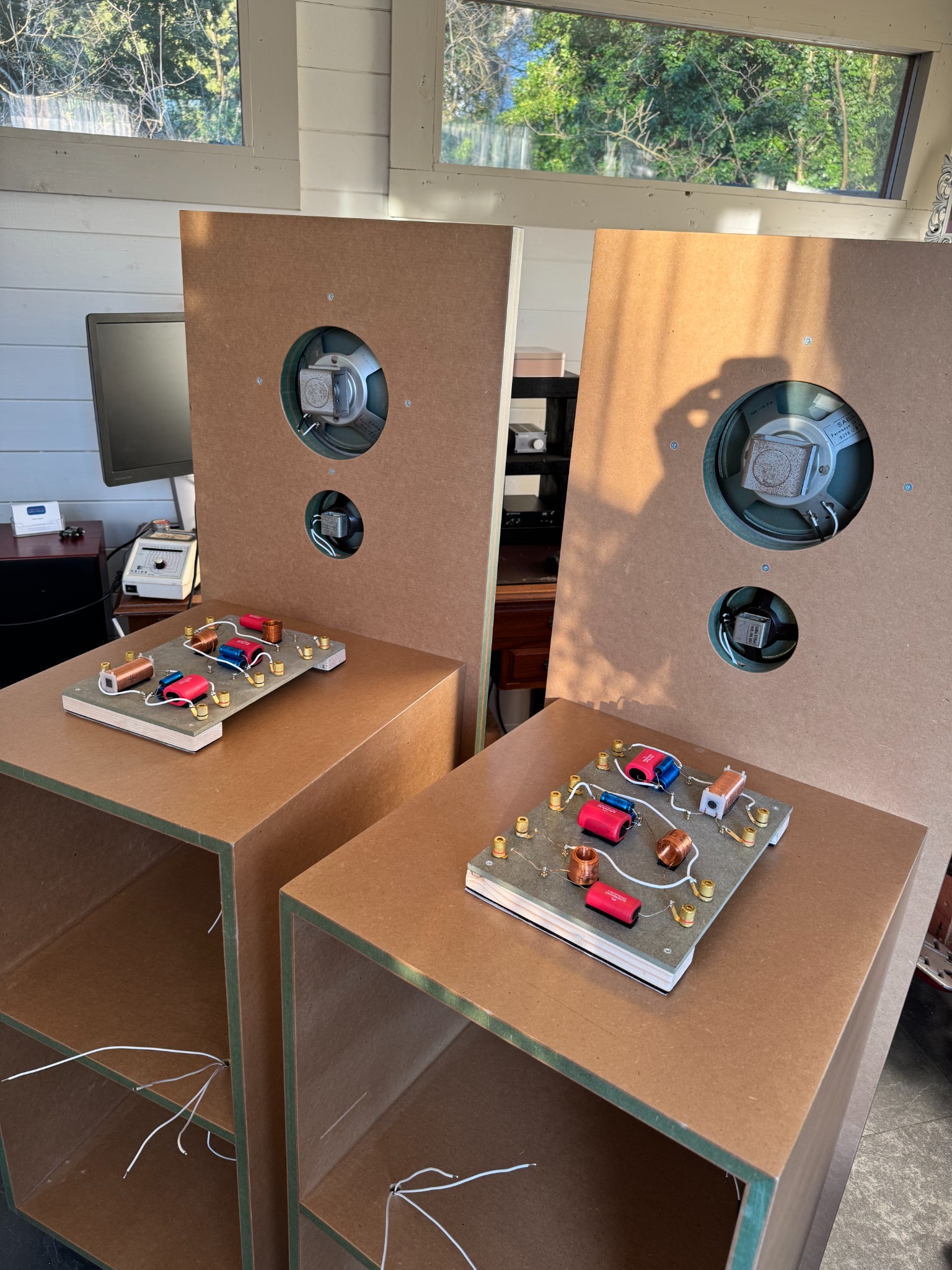
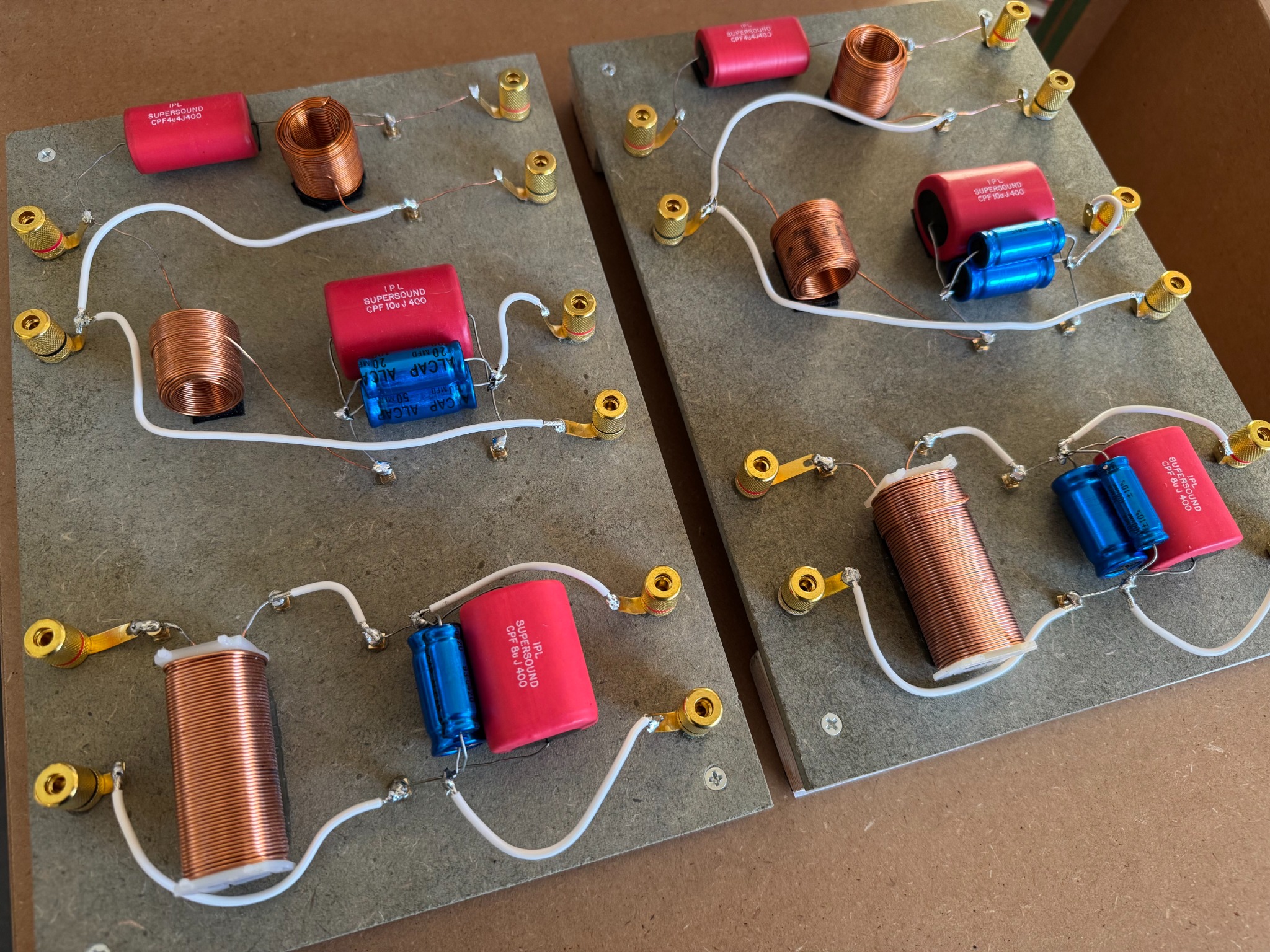
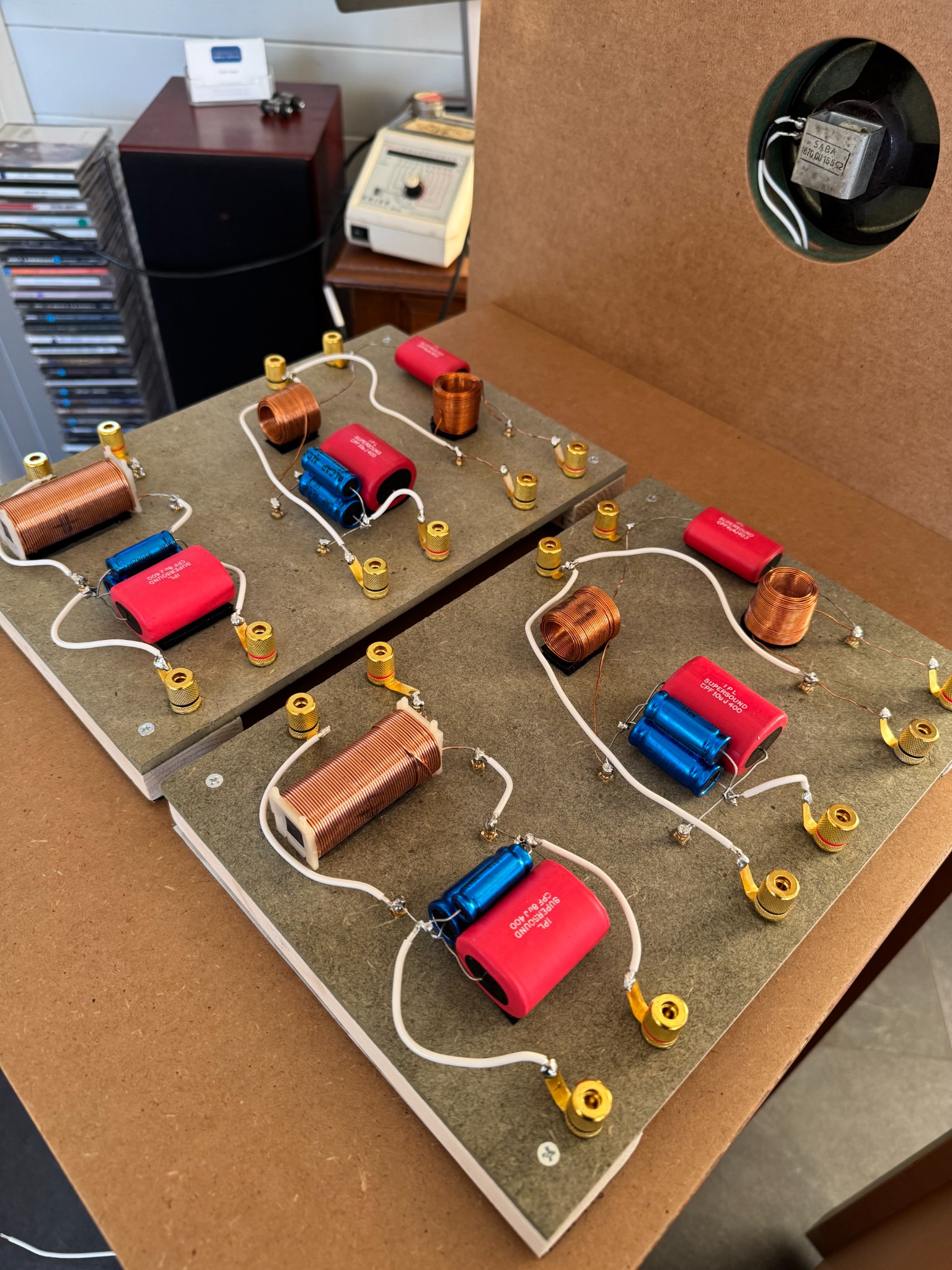
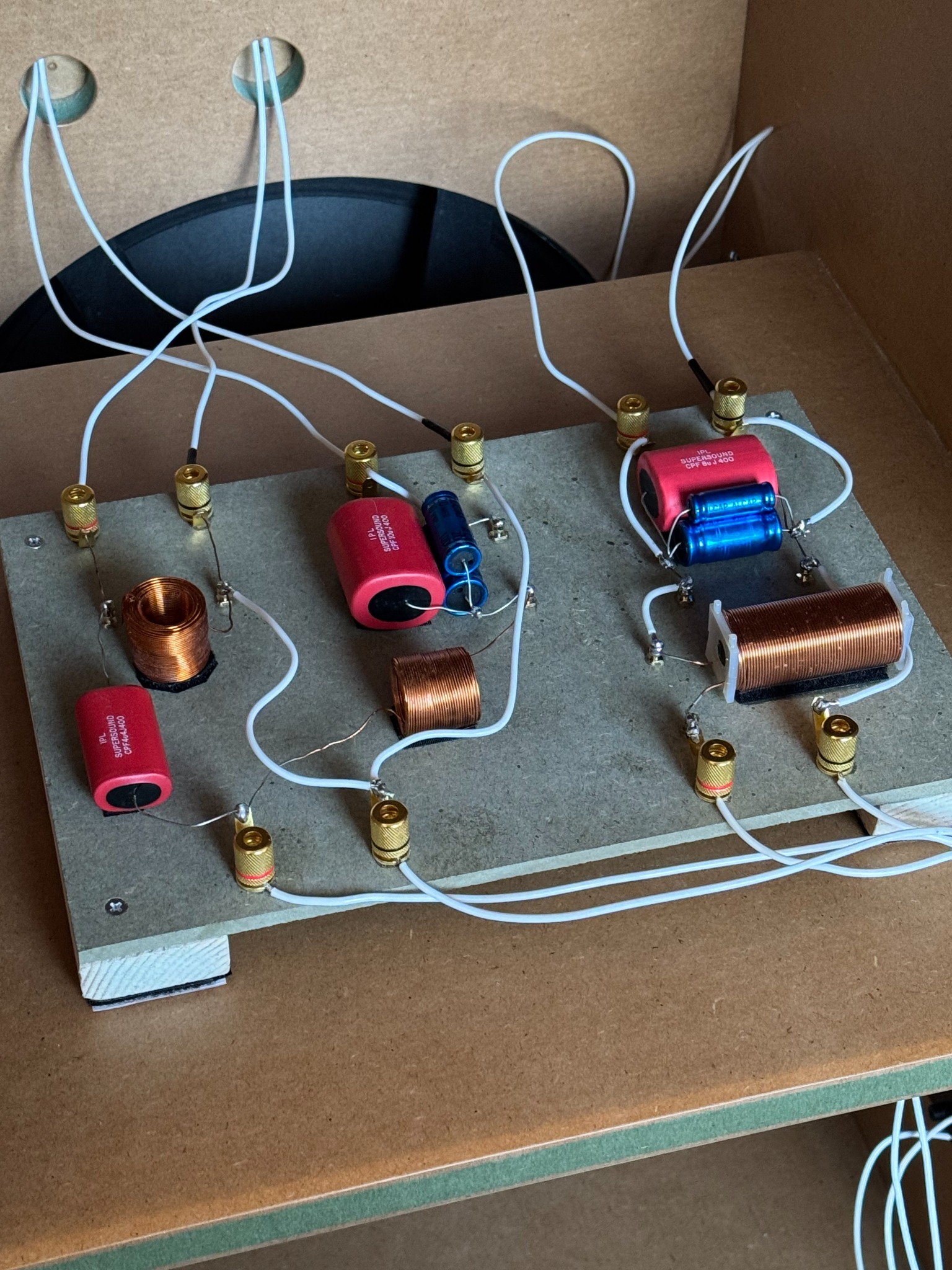
CrossoverCustom hand-built networks, with selected/custom IPL Acoustics parts and a documented 0.39 mH second-order tweeter inductor with 4 µF series capacitance
Internal wiringSilver-plated wiring and silver solder in the completed reference pair
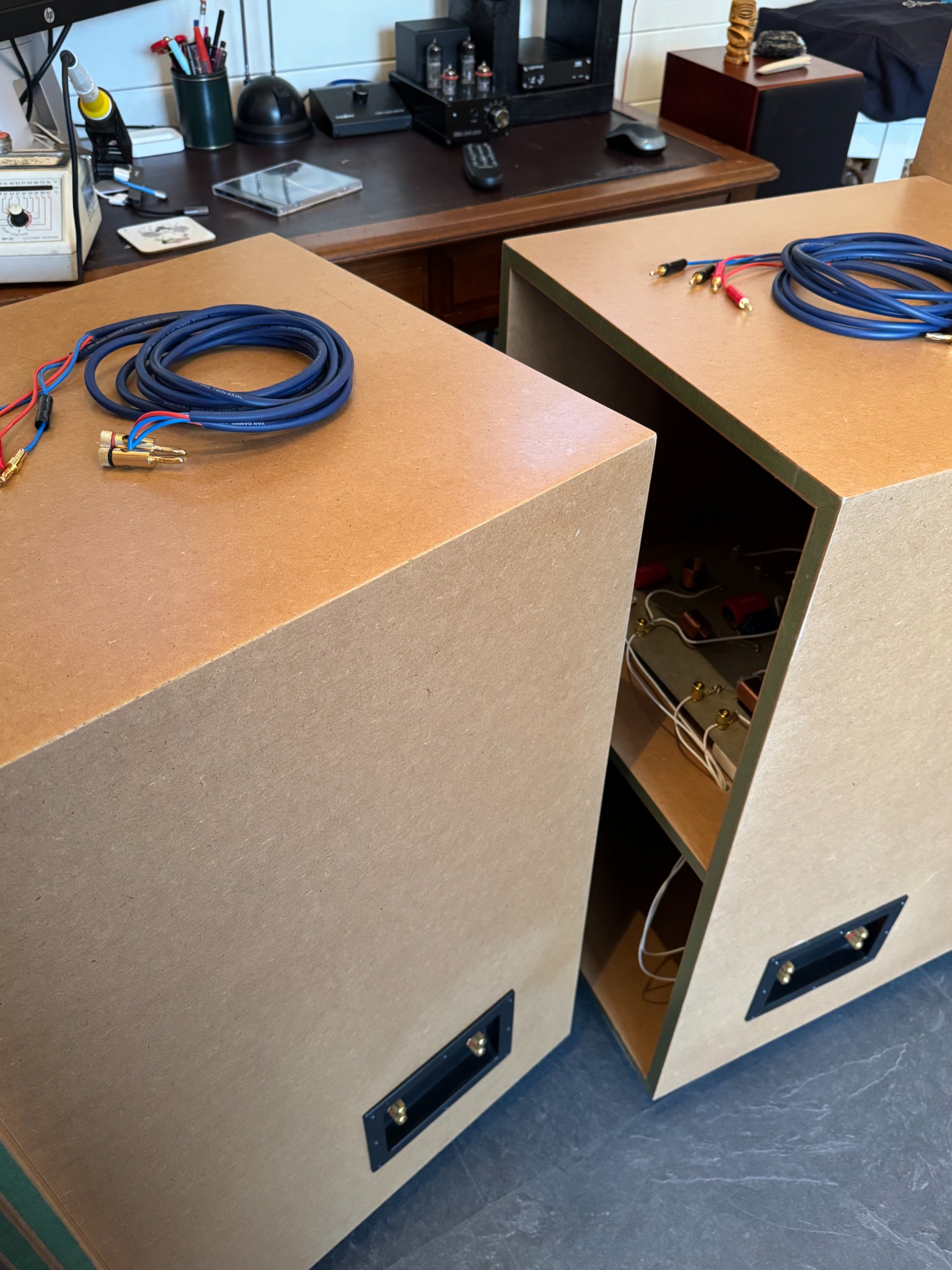
ConnectionBi-wire terminal arrangement
MobilityCastors, practical for a substantial loudspeaker whose placement affects dipole behaviour
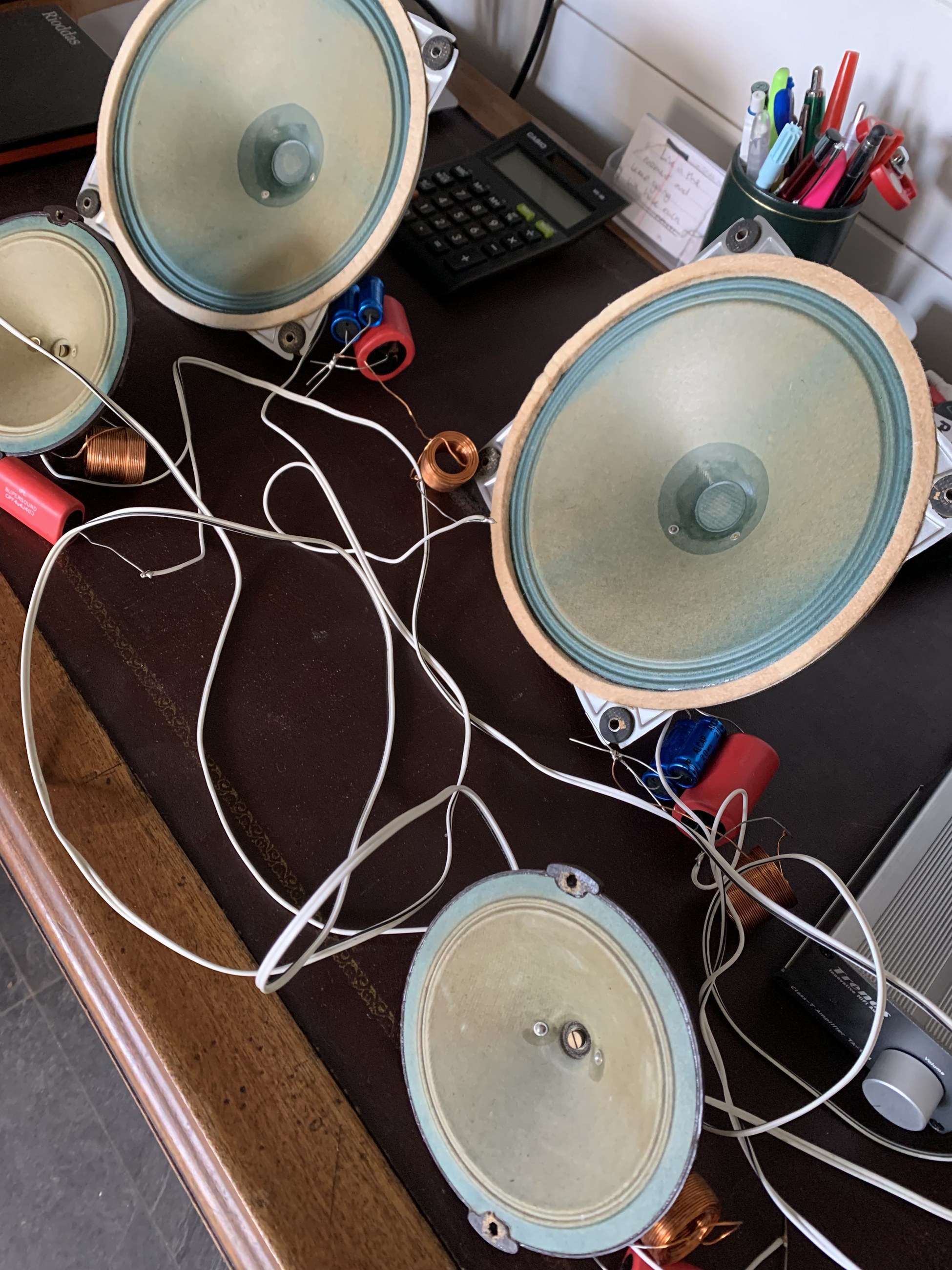
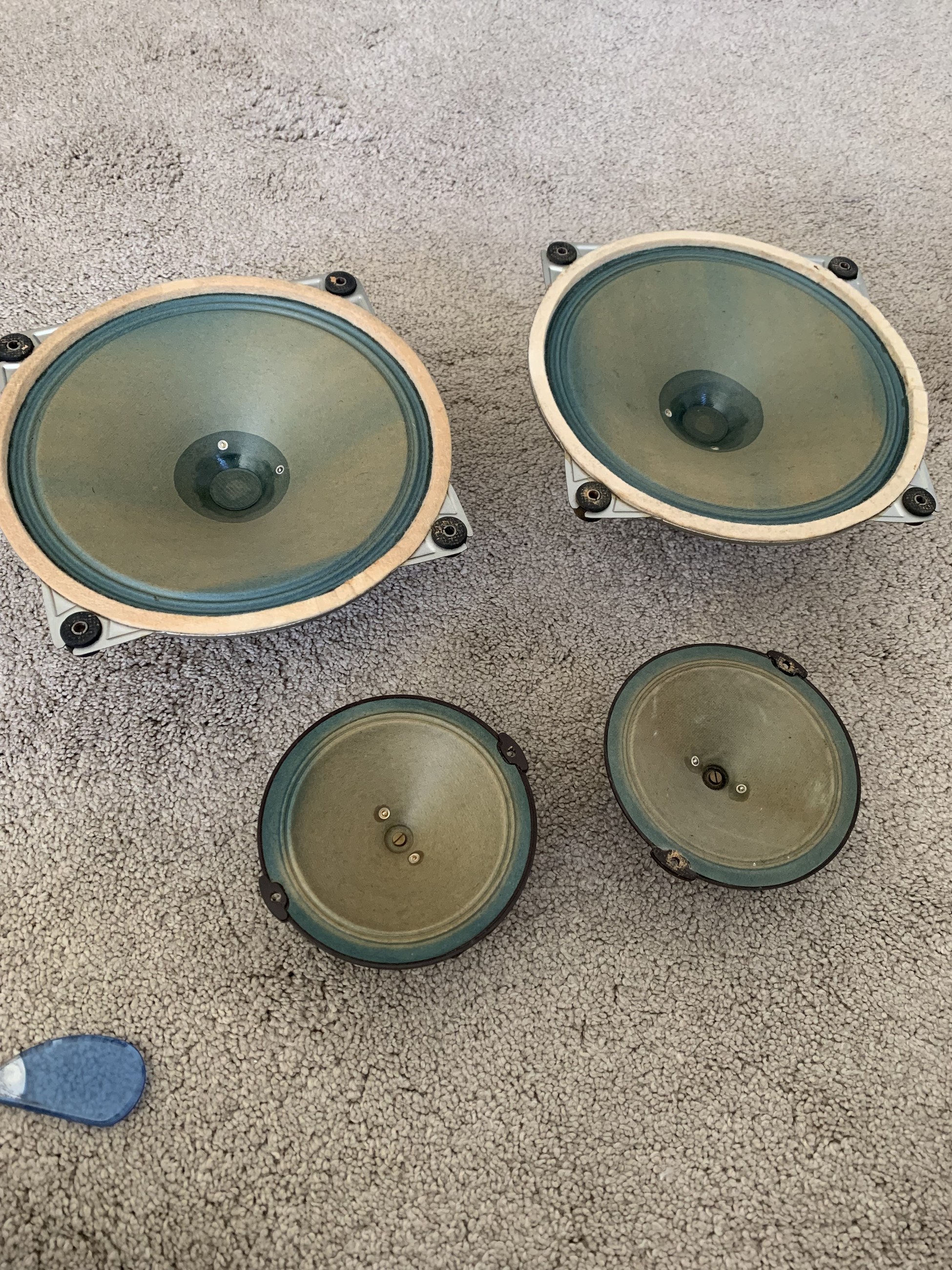
Vintage SABA green-cone paper drivers before the P17 build
The human range

20 cm midrange. 10 cm high-frequency. Paper on paper.

The reference P17 uses a 20 cm SABA green-cone paper driver for the midrange and a 10 cm SABA green-cone paper driver for high frequencies. They are two different driver sizes with a shared paper-cone lineage, chosen to keep voice, articulation and instrumental colour coherent through the most exposed part of the spectrum.

20 cm SABA midrange

The larger paper cone carries the human centre of the loudspeaker: vocal body, strings, guitar, piano harmonics and much of the tonal information that makes an instrument sound made of something real.

10 cm SABA high-frequency driver

The smaller paper cone continues that material character upwards, contributing presence, articulation and air without inserting an obviously separate tweeter personality.

The attraction is not nostalgia. It is the combination of low moving mass, immediacy and tonal texture heard in these specific vintage drivers. The development question is how far their air and refinement can be extended without losing the body that makes the pairing special.

Paper, ribbon and capacitor voicing →

Original P17 video from the build archive.

Built for another room

A commission starts with the reference, then respects the system around it.

Vintage driver availability, finish, room placement and any development options are discussed before a specification is fixed.

Why the word “human” keeps appearing

The P17 was judged by what stopped demanding attention.

The strongest March 2025 note does not celebrate a frequency band. It says the necessary parts are present, but attention has moved to the piece of music itself.

Voice

The lightweight SABA paper drivers are valued for intelligibility and harmonic continuity through the region where human hearing is most sensitive to character.

Scale

The 15-inch bass driver contributes physical ease and displacement, supporting the illusion that voices and instruments occupy believable size.

Space

Open radiation and room interaction can create depth and ambience without making brightness do all the spatial work.

“The songs feel like stories.”

That line matters because it describes the point at which technical qualities became subordinate to narrative and emotion.

Reference first

The crossover story has four distinct stages.

The later capacitor work did not simply climb a price ladder. It moved from a successful reference, through Lampizator-inspired premium allocation and a cost-no-object V-Cap experiment, before settling on a more intelligently proportioned researched route.

Built / heard

1. Reference network

4 µF IPL Supersound on the 10 cm high-frequency path; 70 µF Alcap + 10 µF IPL on the 20 cm midrange path; 60 µF Alcap + 8 µF IPL on the 15-inch bass path. This is the completed March 2025 musical reference.

Earlier premium philosophy

2. Mundorf / Clarity route

The Lampizator-style premium hierarchy concentrated expenditure where the ear is most exposed: Mundorf Supreme for the high-frequency path, ClarityCap for the midrange, and a deliberately more pragmatic bass capacitor. This was an important bridge between the original network and the later V-Cap research.

No-compromise exploration

3. Full V-Cap route

4 µF ODAM + 0.1 µF CuTF at high frequency, four 20 µF ODAMs for 80 µF midrange, and two 33 µF ODAMs selected towards roughly 68 µF for bass. This preserved the extreme cost-no-object branch, but it did not become the final researched recommendation.

Mature researched route

4. Optimised allocation

4 µF ODAM + 0.1 µF CuTF on the 10 cm SABA, 80 µF ClarityCap CSA on the 20 cm SABA, and 68 µF Monacor MKP on bass. Later 2025 system documents carry this combination forward as the preferred researched architecture: exotic where influence is greatest, excellent film where scale matters, and no needless boutique spend in bass.