Holography is not a giant soundstage.
The archive gradually separates two ideas that are often confused: impressive spatial spread and the more difficult illusion that performers possess body, distance, ambience and stable physical relationships.
Width is only the first dimension.
A stage can be enormous and still feel flat.
For Luke, holography becomes convincing when the central performer retains body while the surrounding acoustic expands. Image position, front-to-back depth, reverberant decay and the sense of air between performers need to agree. The result should feel less like objects pinned to a panoramic line and more like a performance occurring within a volume.
This is why the notes sometimes prefer a slightly less spectacular but more grounded presentation. Spatial information only matters when the people inside it still feel human.
Image position
Left/right localisation must be stable enough that attention can move without the stage collapsing.
Image body
A voice needs width, height and harmonic substance, not merely a sharp coordinate.
Front-to-back depth
Near and far information should differ naturally rather than everything sitting on one plane.
Decay
Reverberation and tails connect the direct sound to the acoustic in which it was captured.
Room tone
Low-level ambience creates the sensation that the recording contains air beyond the loudspeakers.
Coherence
All of this must remain one musical event. Spatial resolution that fragments the performance defeats the purpose.
Architectural holography and emotional holography.
One of the most useful distinctions in the later system narratives is that different chains can create dimensionality for different reasons.
Architectural
Associated in the research with very precise proportion, separation, layering and stage structure. The proposed PCM63/M24 route is explored in this direction.
Emotional
Associated with density, breath, harmonic continuity and a sense of human presence. The TDA1541/valve and SABA ideas repeatedly pull the philosophy this way.
These are treated as useful listening concepts, not scientific categories. The long-term system goal is structural clarity that does not lose flesh, and emotional density that does not lose space.
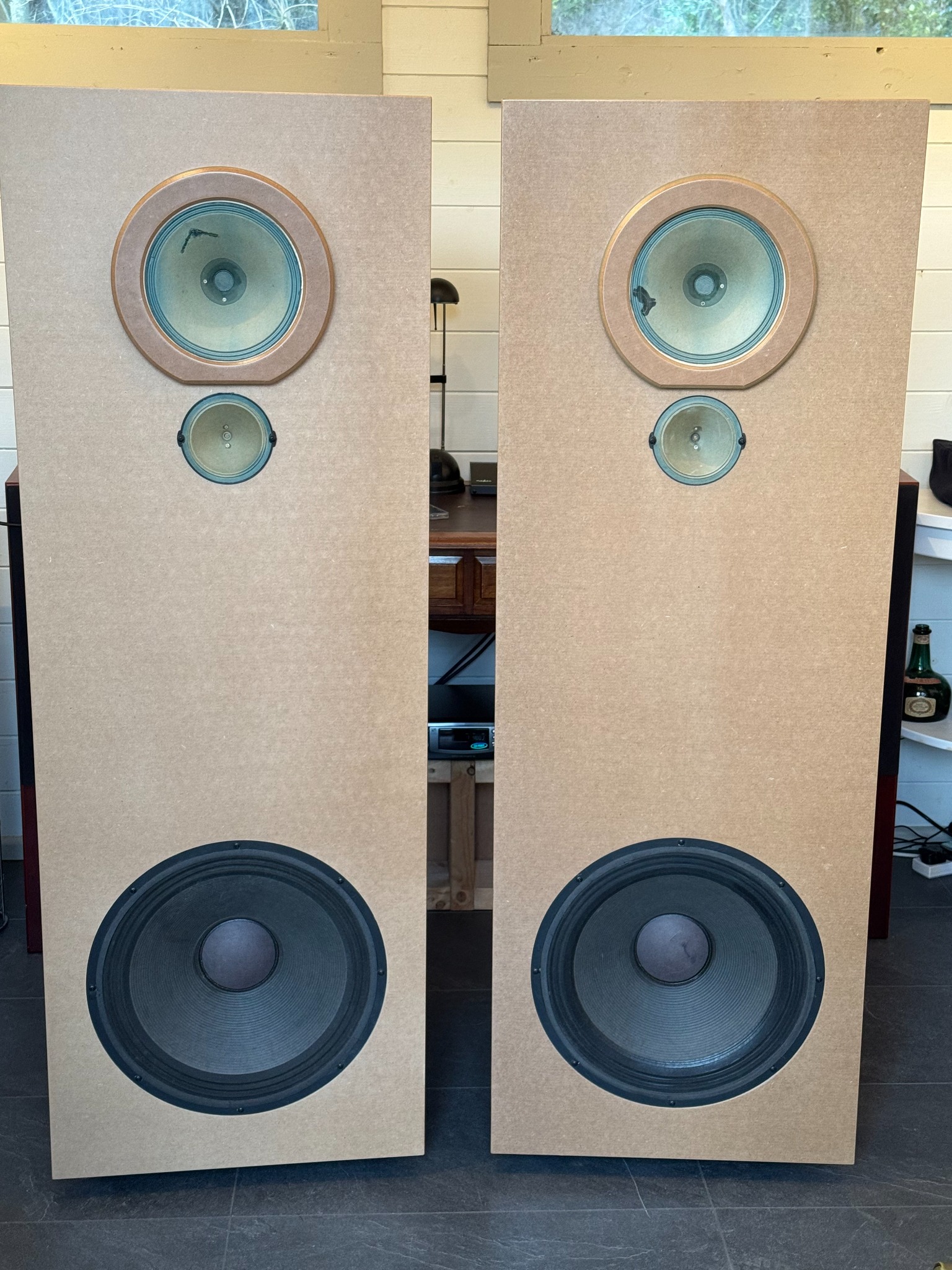
Dipole radiation makes placement part of the instrument.
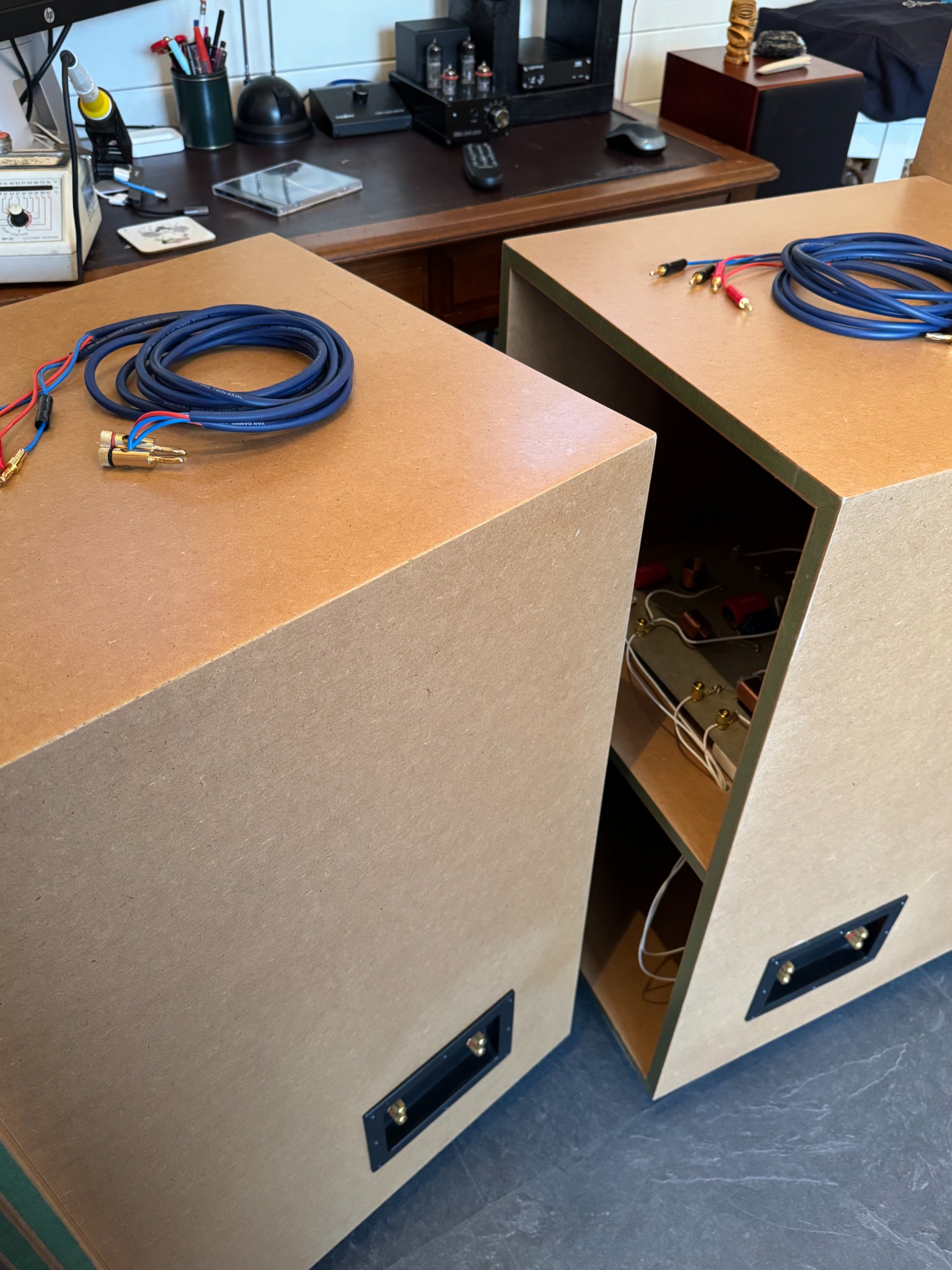
The P17 does not attempt to remove the room from the listening event. Its open radiation makes the relationship deliberate.
The rear wave, distance from boundaries, toe-in, listening position and room decay all affect the perceived balance between direct sound and reflected energy. When the relationship works, the rear radiation can help create depth and atmosphere without requiring an artificially bright tonal balance.
Not treble alone
Extra upper-frequency energy can expose ambience but can also thin image bodies or exaggerate edges.
Not width alone
A sound can extend beyond the cabinets while remaining emotionally distant and two-dimensional.
Not a DAC-chip property
Clocking, analogue stage, power, amplification, transducer, room and recording all participate.
Not on every record
A system cannot invent venue information that the recording or mastering did not retain.
The definition became stricter because width repeatedly proved insufficient.
Body inside space
The portable CD notes emphasise tone, depth, live presence and organic balance. The image matters because the instruments retain physical colour, not because the stage is simply wide.
Grounded dimensionality
The metal-can Gold Seal experiment was described as fuller, bigger and smoother while remaining intimate. That combination became one of the clearest solid-state examples of the preferred 3D presentation.
Air without losing the performer
The GE driver tubes supplied extra atmosphere and “inner light” but were still heard as intimate. They helped separate the idea of air from a simple treble lift.
Immersion without giant staging
The 2026 notes explicitly say the stage is not massive, yet the sound is immersive and scaled like a desktop amplifier because vocals retain fullness while the track remains coherent.
Room volume
The open architecture makes depth and reflected energy part of the physical setup. The strongest listening note ultimately abandons stage description altogether because attention has moved to the song.
Shape + depth + decay + coherence
A holographic image must have substance, occupy plausible space and remain connected to the recording’s ambience. Precision without body is only localisation.