The reference system is allowed to evolve.
P17 is complete. Around it sits a deliberately modular source, preamp and amplification philosophy. The reference-system map separates what has been built and heard from what remains in development or exploration.
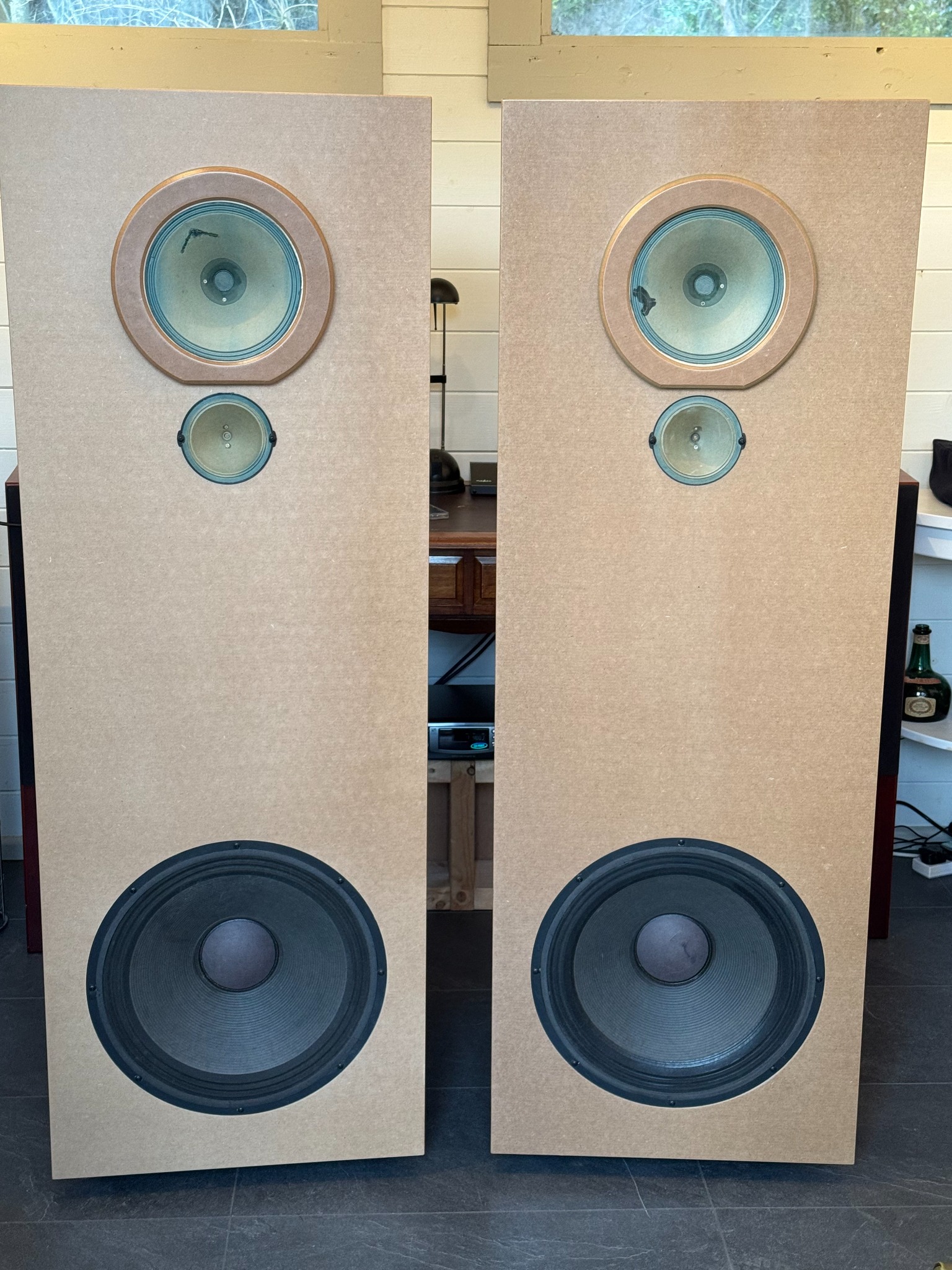
The loudspeaker is complete. The upstream architecture can keep evolving.
The finished P17 pair is the constant against which future DAC, preamp and power-stage ideas are judged.
That matters because the reference system is not an imagined shopping list. The loudspeaker already exists, has a documented listening history, and provides a real destination for every source and amplification experiment that follows.
Complete, developing and exploratory paths.
Completed
P17 reference pair
The fixed anchor: 20 cm SABA paper midrange, 10 cm SABA paper high-frequency driver, 15-inch McKenzie bass, open/dipole architecture and the listening diary established through 2022–25.
Experience
TDA1541 / TDA1549 family
The Philips TDA1549 path is directly built and heard with a 6N16B-V valve stage. TDA1541 players are part of the wider source collection and development thinking around multibit texture and immediacy.
In development
PCM1798 + 6N16B-V
Boards, valves and power-supply work exist, but the full Lampucera-style DAC/preamp vision remains a development project. It is presented here as architecture, not finished product.
Exploring
PCM63 / Monarchy M24 route
Researched for structured dynamics, dimensional organisation and tube line-stage possibilities. It remains a prospective branch of the reference system.
Exploring
SET, Class A and high-current options
845/211/2A3 ideas, Monarchy SM-70 Pro and other architectures are compared according to the same question: which stage gives P17 drive without flattening its human and spatial qualities?
Because the journey is part of the proposition.
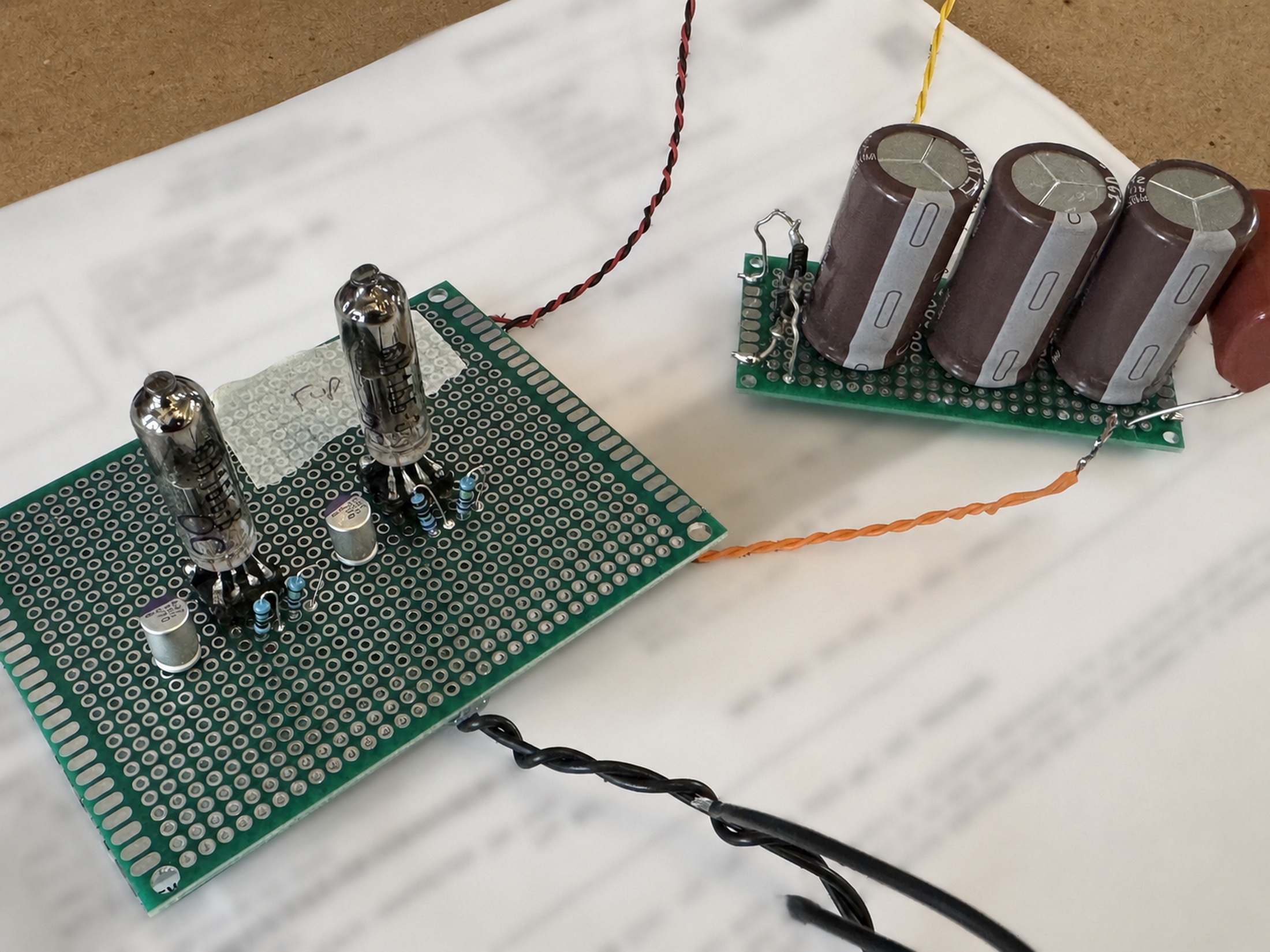
Not every researched idea has been built. The development archive shows how choices are narrowed: circuit first, then component, then system role, then listening target. The hardware shown here is the 6N16B valve-stage and supply development work for the PCM1798 branch, not a completed DAC/preamp.
That same discipline is what a client receives in advisory work or a P17 commission. A recommendation is strongest when its status and evidence are clear.
Not one DAC to defeat every DAC.
Later narratives explore a reference system in which different source architectures remain available because each can reveal a different relationship between structure, tone and emotion.
| Direction | Role | Status |
|---|---|---|
| TDA1541 + valve stage | Emotional / tonal reference direction | Exploring |
| PCM1798 + 6N16B | Hybrid DAC/preamp, modern conversion with familiar valve language | In development |
| Monarchy M24 / PCM63 | Structural scale, microdynamics and proposed architectural holography | Exploring |
| P17 | Acoustic reference and common destination for the upstream experiments | Built / heard |
The master-system documents are a sequence of decisions, not a shopping list.
The research repeatedly revisits the same architecture from different angles: source character, preamp role, power delivery and how P17 should be driven. Later documents sometimes supersede earlier preferences, and the site keeps that evolution visible.
P17 first
Once P17 was complete, the upstream system could be judged against a fixed loudspeaker rather than an imagined endpoint. This reversed the usual temptation to specify an entire “endgame” chain before the room had spoken.
TDA1541 non-A
The Sony CD710 path represents the deliberately raw, emotionally immediate multibit branch: NOS/clock work, a valve output stage and coupling-capacitor choices intended to preserve texture while adding coherence.
PCM1798 + 6N16B
The Lampucera-style build became the most fully specified future project: PCM1798 conversion, direct I/V into an SRPP stage, line inputs, fixed/variable output and a modelled high-voltage supply.
PCM63 / Monarchy M24
The M24 research moves in a different direction: PCM63 as a structural, highly resolved source with its own tube stages, potentially retaining the external 6N16B preamp as a complementary voice rather than replacing it.
Temple, SET, then Monarchy
Temple Audio/supercapacitor amplification first fitted the purity-and-speed brief. Bi-amping and 2A3/300B/845/211/GM70 routes were explored. A later master decision then preferred dual Monarchy SM-70 Pro units in mono as the solid-state/Class-A endpoint for the P17 concept.
Preamp-first
The 6N16B documents increasingly place volume, source selection and line gain in a dedicated SRPP preamp/DAC rather than in an integrated amplifier. That choice is architectural: it keeps future sources modular.
The later master documents do not erase the earlier system. They explain why the branches changed.
| Stage | Earlier direction | Later direction | Reason preserved in the archive |
|---|---|---|---|
| Digital source | TDA1541 Sony / Arcam WM8741 / Black Ice branches | Parallel TDA1541 non-A, PCM63/M24 and PCM1798/6N16B identities | Different DACs are allowed to express different forms of truth rather than converge on one flavour. |
| Control | Audio Note / Graham Slee / valve preamp possibilities | 6N16B direct line stage or M24/autoformer control | The preamp becomes the system centre, making the power stage deliberately simpler. |
| Power | Temple Bantam / Temple monos and big SET ideas | Later Monarchy SM-70 Pro mono branch | The archive moved from compact transparency and bi-amp possibilities towards Class-A texture and authority. |
| Loudspeaker | P17 as long-term concept | P17 completed March 2025 | The loudspeaker moved from research anchor to actual listening authority, changing how future electronics should be judged. |