CD players
The archive follows CD from complete commercial players into valve output stages, vintage multibit research and transport/DAC separation. The recurring lesson is that mastering, converter architecture and analogue implementation all matter.
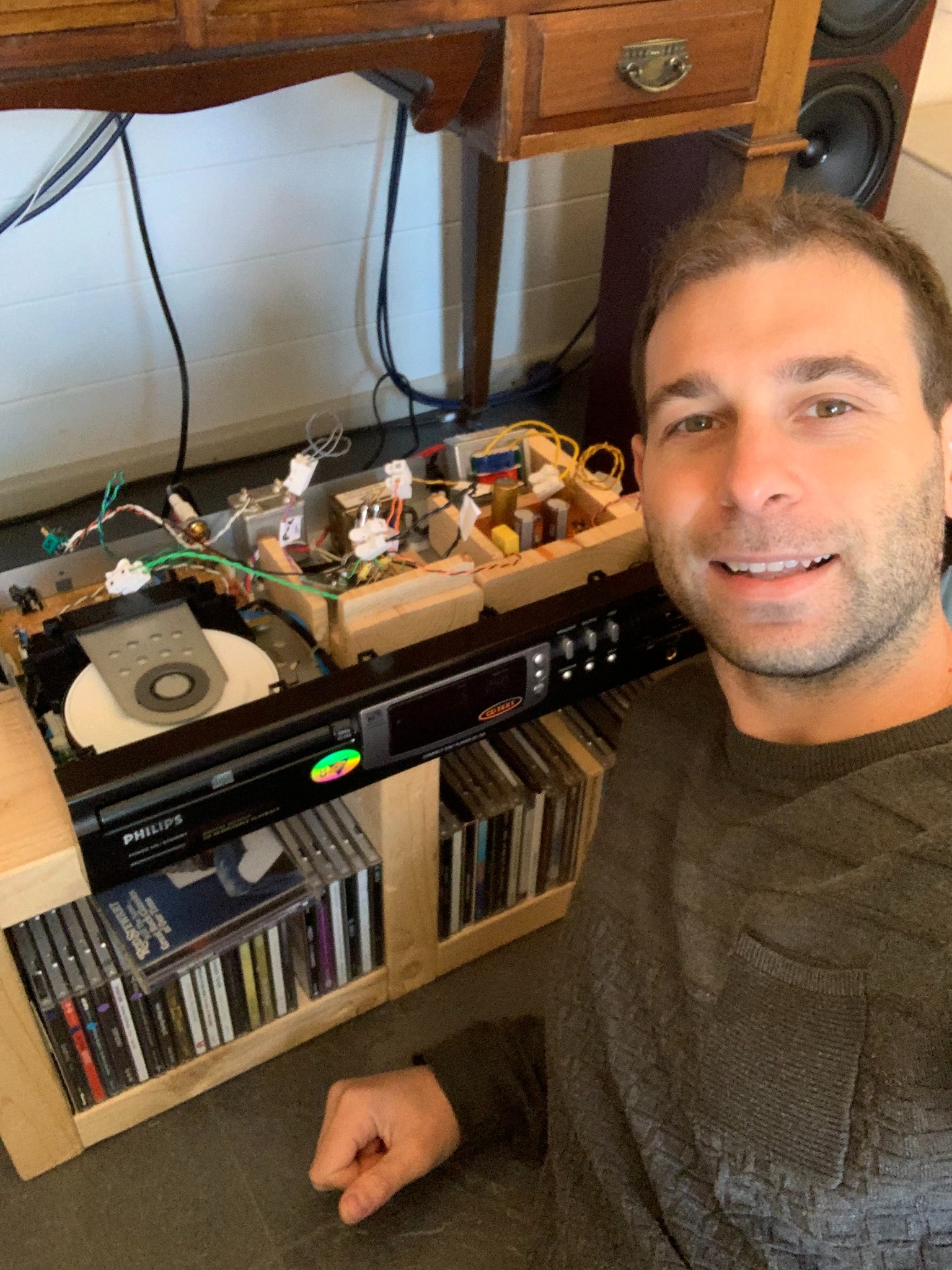
Philips CD753: the CD player that changed the hierarchy.
The TDA1549 player became a reference after the analogue output stage was rebuilt around 6N16B-V valves.
The important lesson was not that TDA1549 suddenly became a different DAC chip. It was that conversion, current/voltage handling, analogue output, regulation, gain structure and the following preamp all participate in the final sound. That player later became part of the P17 evaluation chain.
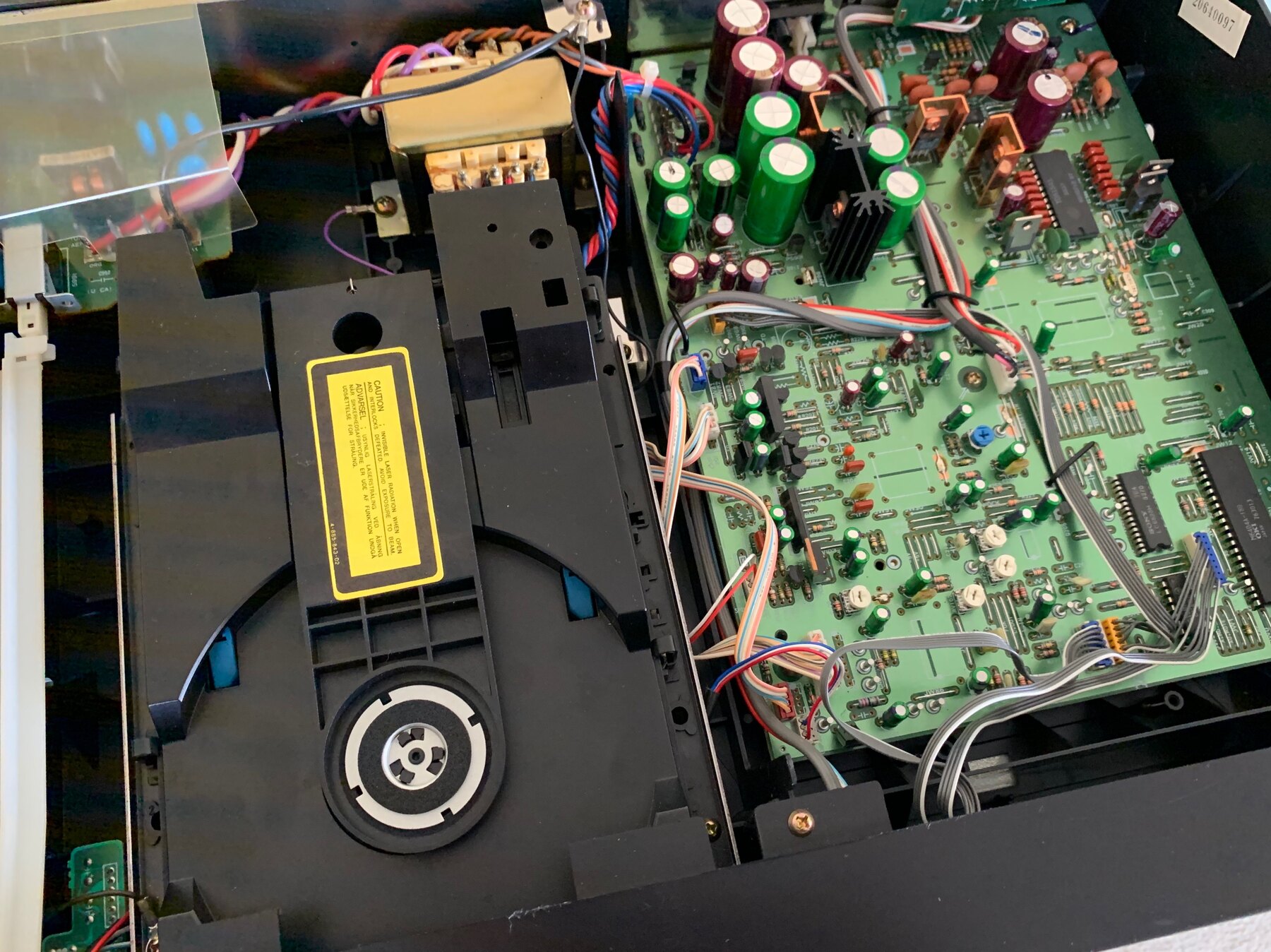
Sony CDP-710 from the archive. The proposed reference modifications remain unbuilt.
Sony CDP-710 + TDA1541 non-A.
The large-system notes repeatedly return to a single-chip TDA1541 non-A Sony as an emotional counterpoint to the more controlled PCM63 branch.
The proposed development path includes NOS/reclock work, a valve analogue stage, careful coupling and power-supply work. Later research converged on a 1983 gold-grid tube direction for the surrounding system. Those are design intentions, not listening results from the completed modification.
The CDP-710 branch matters because it expresses the archive’s “raw versus refined” idea particularly clearly: preserve the timing, density and directness associated with the older multibit architecture, then use the analogue stage and power supply to control roughness rather than polishing away the event.
Each player answers a different question.
| Player / architecture | Role in the archive | Core question | Status |
|---|---|---|---|
| Philips CD753 / TDA1549 | Practical valve-output reference | How far can a modest converter go when the analogue stage changes? | Built / heard |
| Sony D-211 | Portable complete-output-stage reference | Why can a well-matched headphone output feel more complete than a theoretically purer line path? | Built / heard |
| Sony CDP-710 / TDA1541 non-A | Future emotional multibit branch | Can raw multibit tone and timing be preserved while noise, clocking and output-stage limitations are reduced? | Player / research branch; full modification not built |
| Monarchy M24 / PCM63 | Future truth / architecture branch | Can graded R-2R structure, tube output and transformer/autoformer control become the composure reference? | Explored |
| Arcam CD73 / WM8741 | Alternative modern delta-sigma route | How much musical completeness can come from a well-implemented modern converter without forcing a vintage topology? | Explored |
| PCM56 | Historical contrast | How does earlier Burr-Brown smoothness differ from the more characterful TDA1541 branch? | Research comparison |
CD remains valid when the dynamics are there.
The master notes never reject CD as a format. They reject assuming that a 16-bit/44.1 kHz carrier tells you whether the release is dynamically intact, well transferred or emotionally convincing.
Mastering first
Use the best release before blaming the transport or DAC.
Output stage second
Once the data is recovered, the analogue path determines how the converted signal enters the rest of the system.
Architecture as flavour
TDA1549, TDA1541, PCM63, WM8741 and PCM1798 are treated as different starting points, not a universal ranking independent of implementation.