The inexpensive CD player that became a reference.
The Philips CD753 already carried a TDA1549 DAC. The project asked what would happen if the analogue output philosophy changed completely.
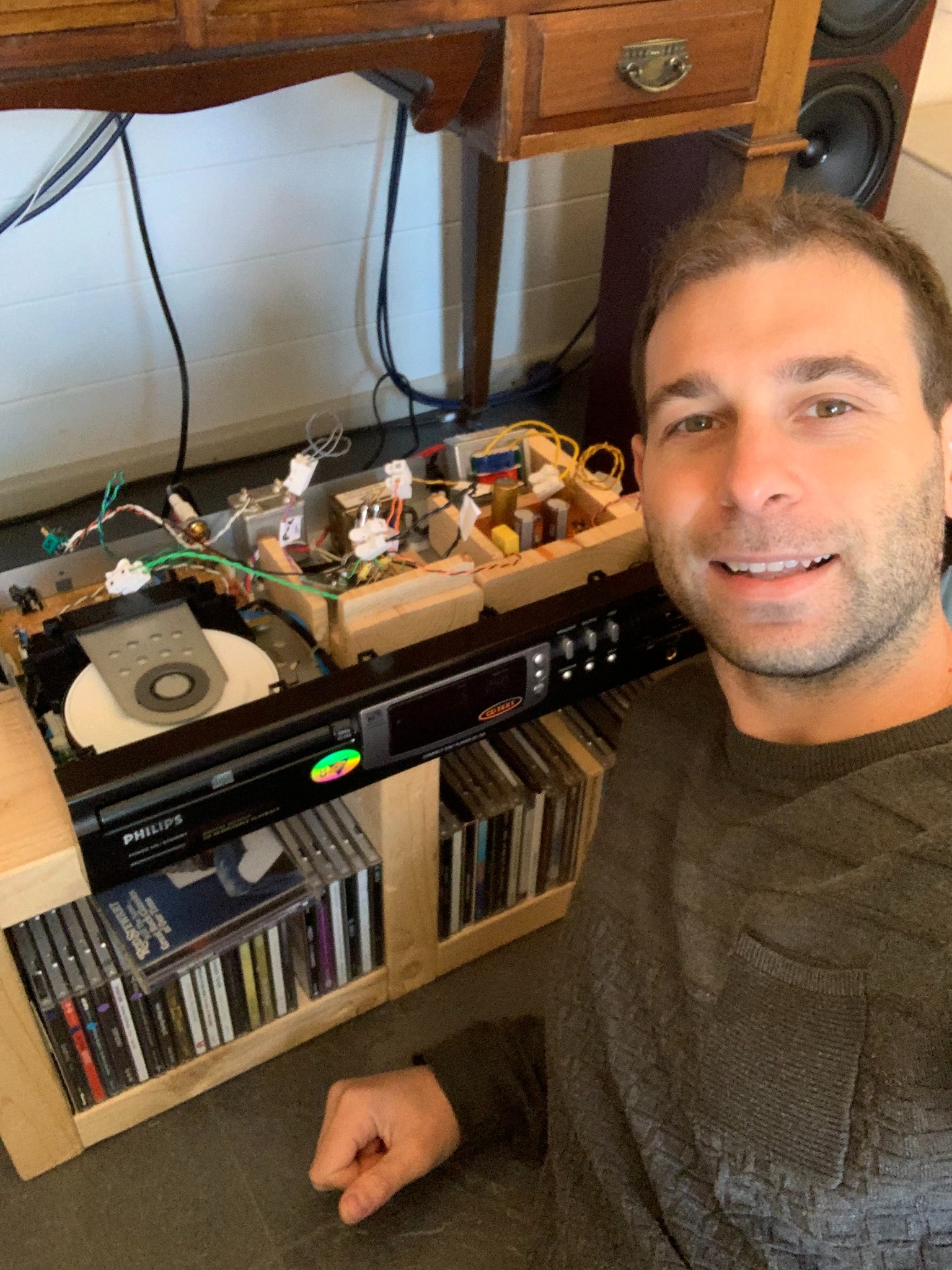
The first MikroLampizator build.
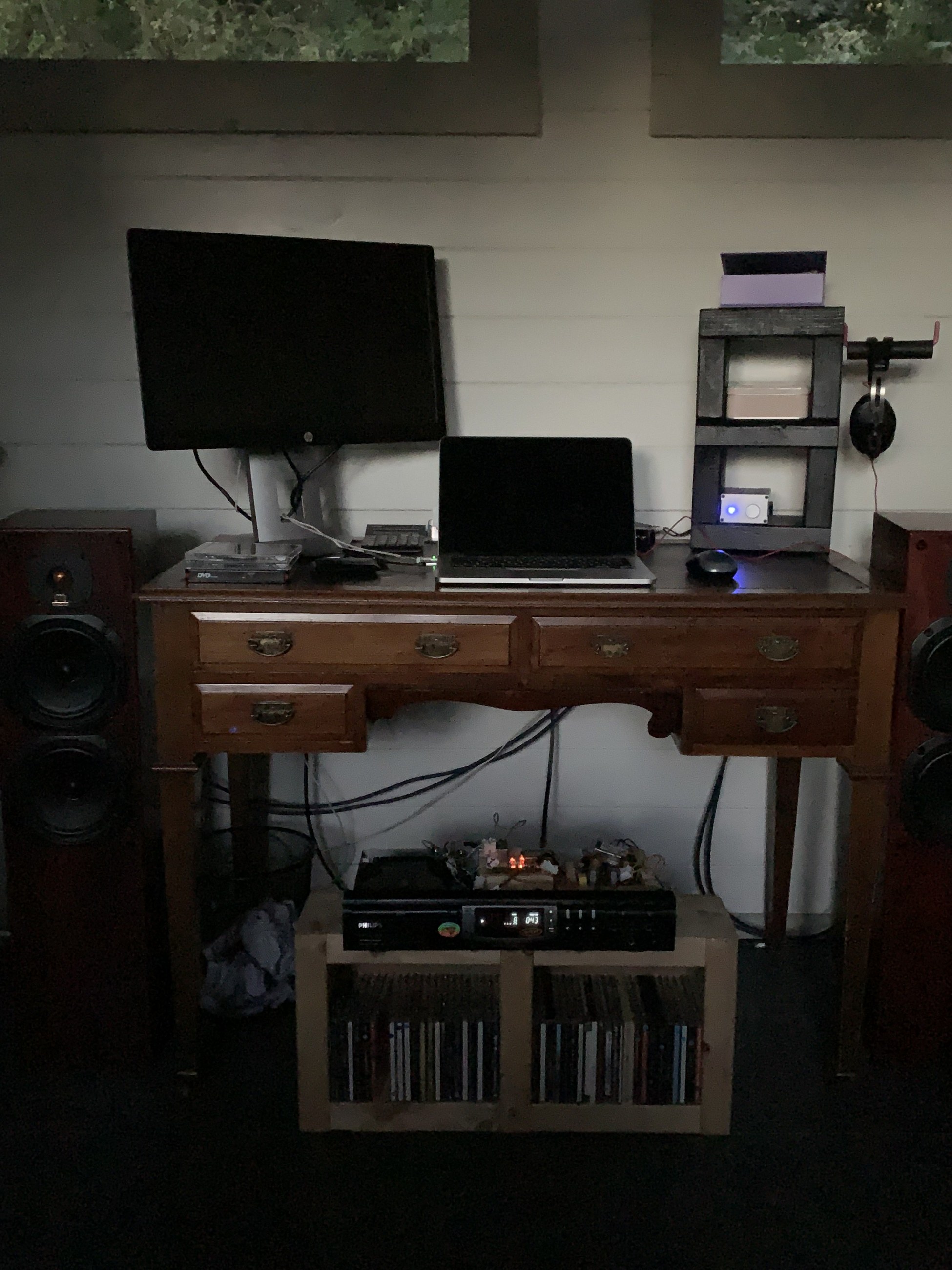
This original archive photograph captures the first MikroLampizator build: an inexpensive Philips CD753 transformed into a personal reference through a hand-built valve output stage.
“Incredible sound, organic, dynamic, real, truthful and non-fatiguing. Awesome bass, mids and whole spectrum.”
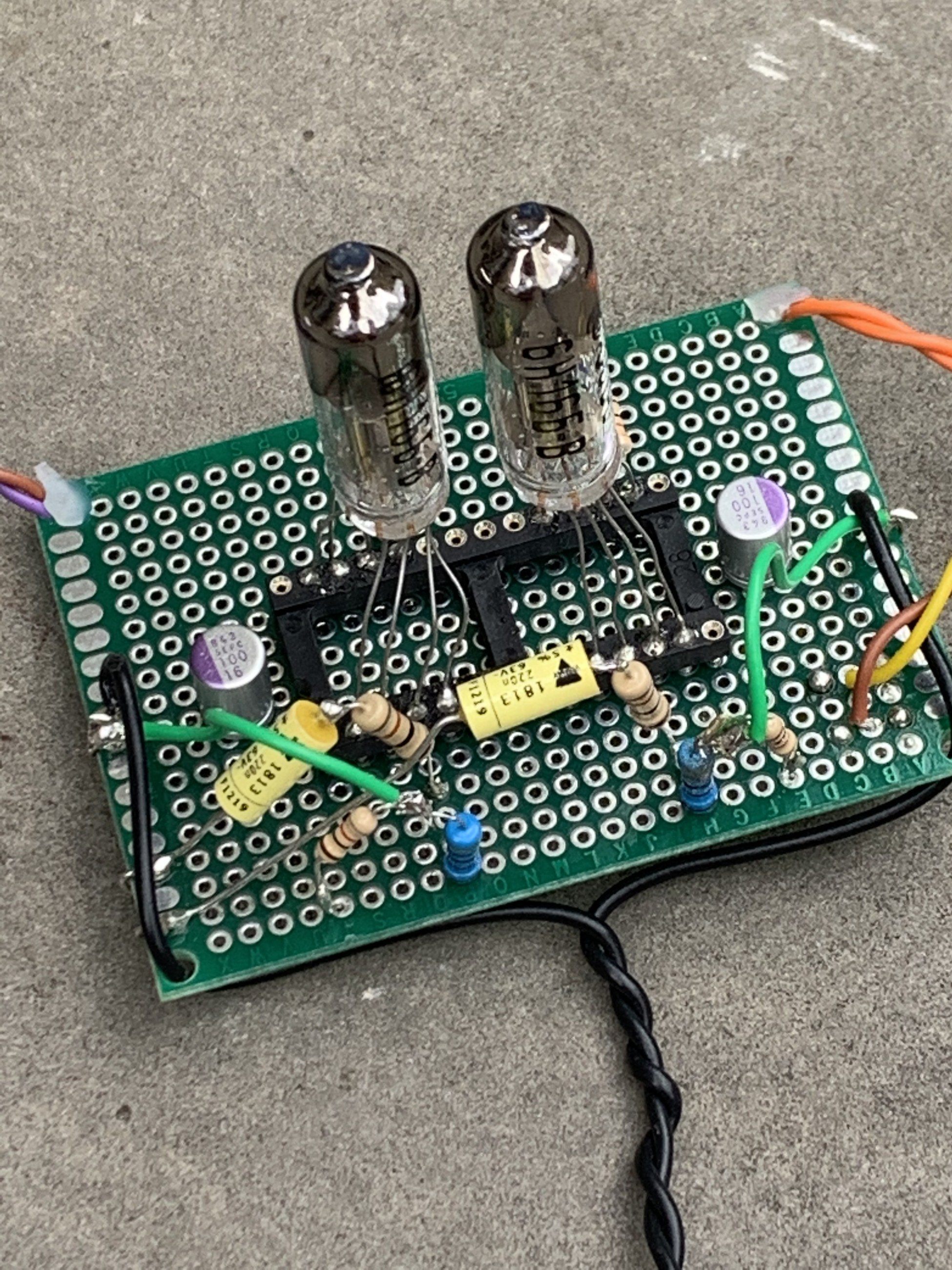
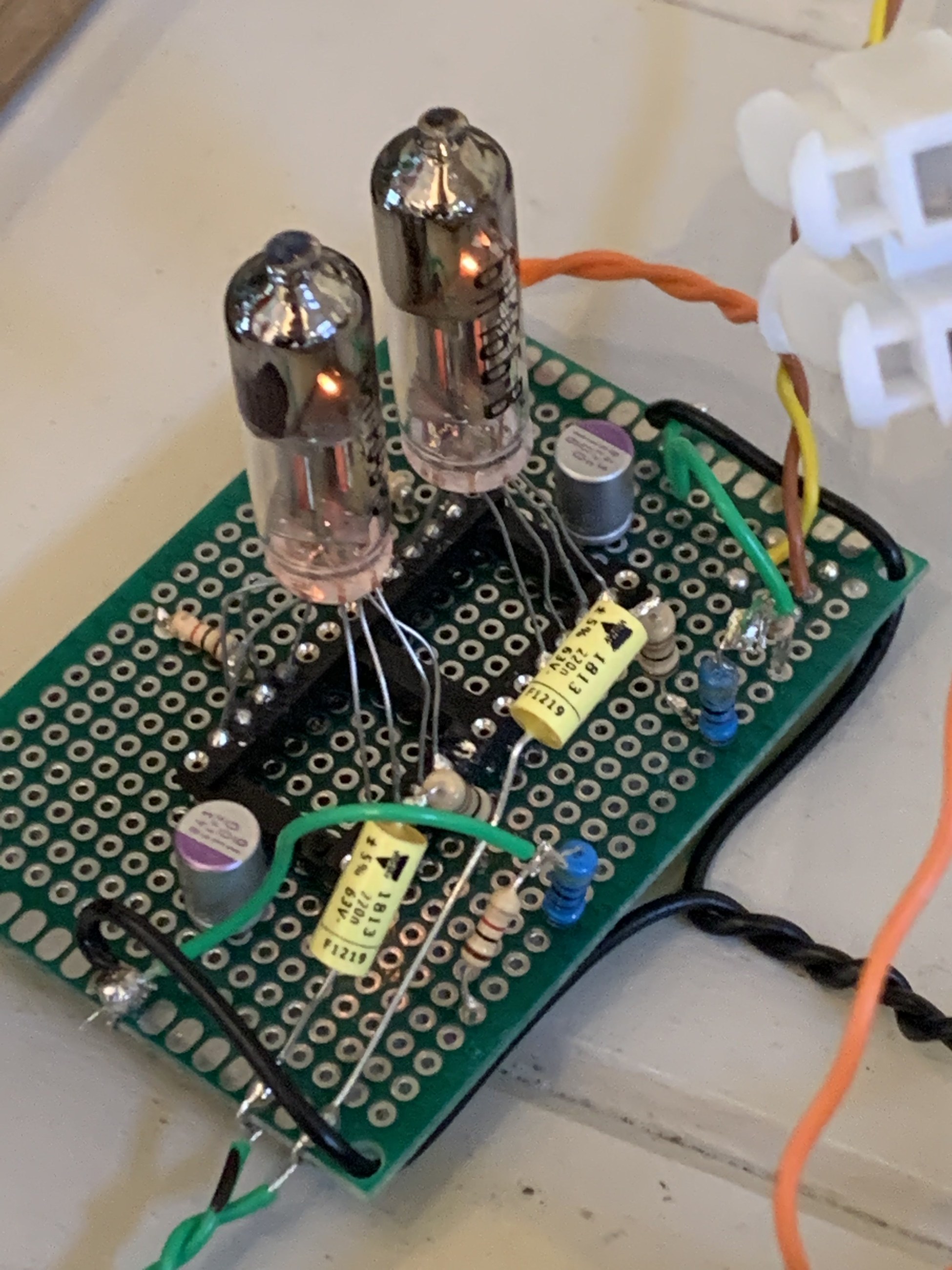
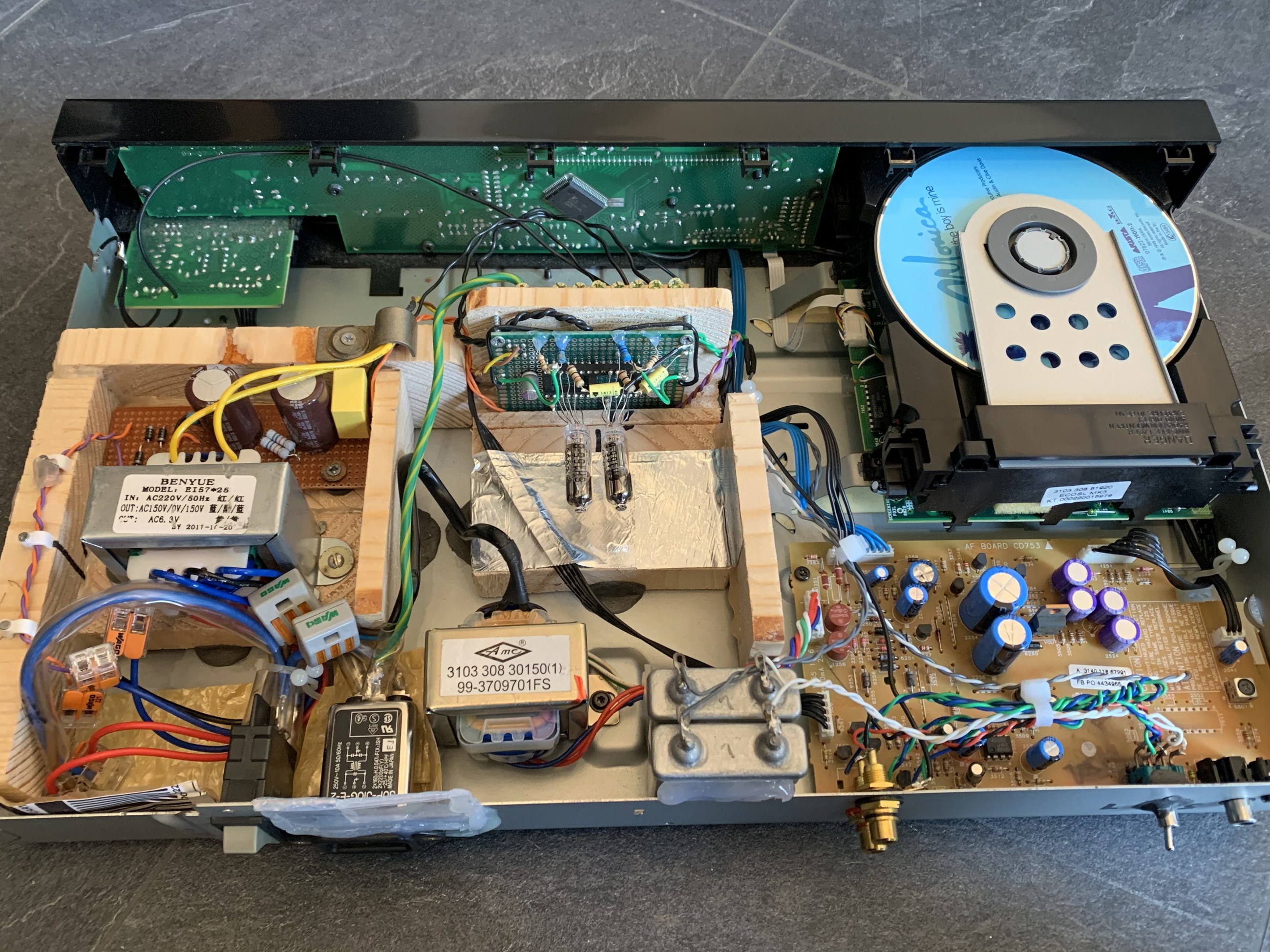
The hand-built stage uses 1988 MELZ 6N16B-V gold-grid valves in an SRPP topology. Sanyo OS-CON work around the regulator and the broader installation reflect the same approach: keep the conversion architecture, rethink the supporting analogue environment.
From valve board to finished player.
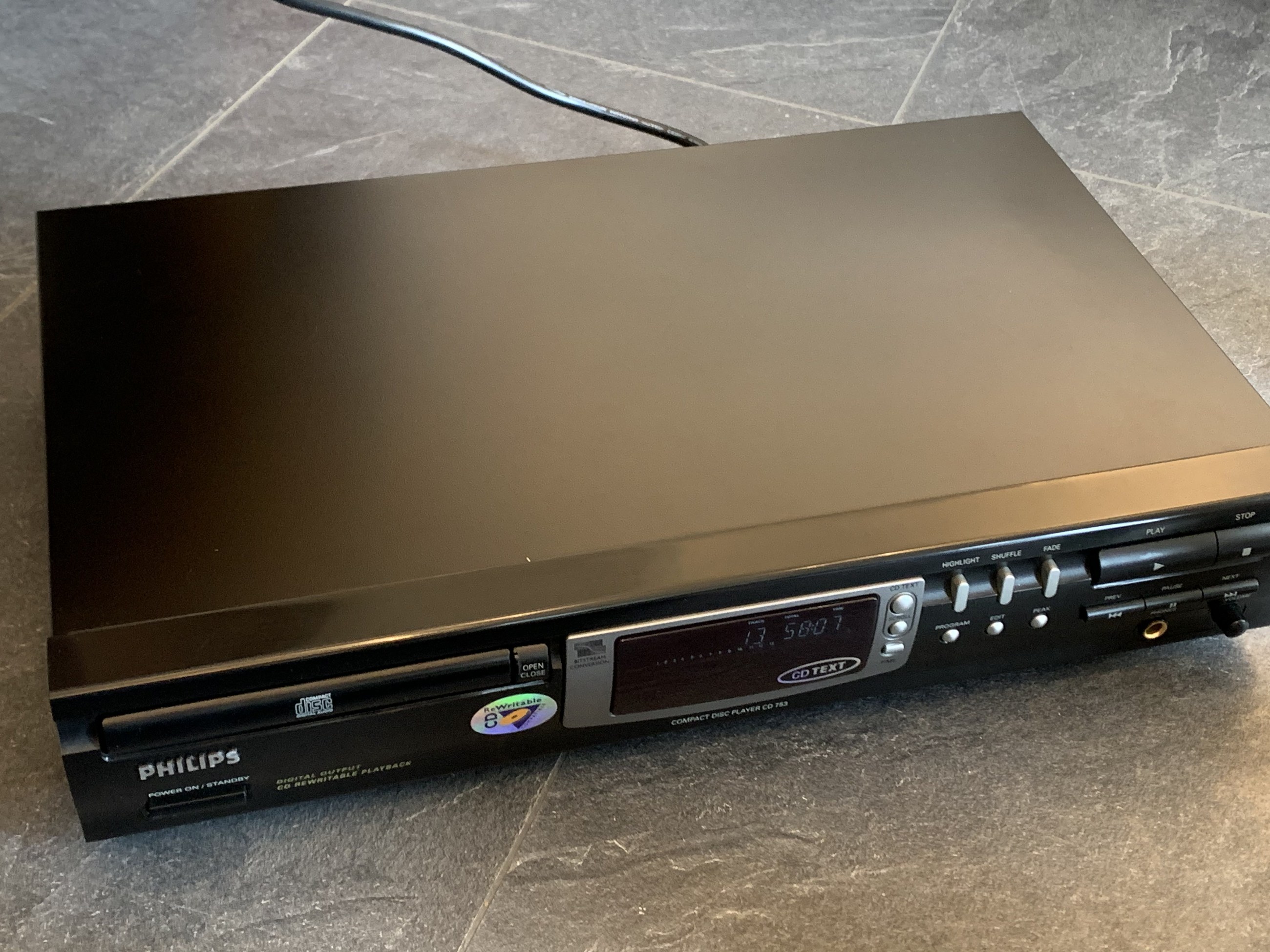
The image sequence follows the physical build rather than repeating the opening portrait: board, powered stage, chassis integration, completed player and final system context.
What the build taught.
Chip hierarchies are incomplete
A modest TDA1549 implementation can become musically compelling when the analogue stage and system around it are right.
Valves are not just warmth
The notes repeatedly emphasise dynamics, truth, openness and non-fatigue, not simply a softer tonal balance.
Preamp interaction matters
In May 2023 the tubed CD output was run through the Little Dot MKII, with Luke noting more body and detail from the complete chain.
A reference earns its role
This source later became part of the P17 listening process, linking digital output-stage experiments directly to the loudspeaker project.
It turned an abstract output-stage philosophy into a repeatable reference.
The CD753 is valuable because it began as modest hardware, was changed in a targeted way, and then remained useful enough to evaluate later amplifiers, headphones and P17.
Keep the converter, change the analogue environment
The TDA1549 itself did not need to become an expensive new DAC. The experiment asked how much of the final character lived downstream.
Listen through later stages
Running the valve output through the Little Dot MKII later added body and detail in Luke’s notes, showing that one successful stage still interacts with the next.
Use it as a reference, not a trophy
The source earned relevance by continuing to make musical sense, including during P17 development.
The CD753 is where the future reference-system logic first became physical.
The Philips CD753 already contained the TDA1549 DAC and remote-controlled variable output. The decision was not to discard it for a more prestigious machine, but to change the environment in which the converted signal left the player.
Four Sanyo OS-CON 680 µF / 6.3 V capacitors around the 7805 regulator were part of the supporting work. The later PCM1798 research would return to exactly this question: which capacitor technology belongs in power decoupling and which belongs in the signal path?
A matched 1988 MELZ 6N16B-V pair formed the internal MikroLampizator. The player retained a selector between the valve route and the original path, making the modification an experiment rather than an irreversible article of faith.
On 6 October 2022 the immediate note was organic, dynamic, real, truthful and non-fatiguing. By May 2023 the valve output was also being passed through the Little Dot MKII, where more body and detail were noted from the complete chain.
The player later became the source used during P17 development. Its value therefore came from remaining useful as the rest of the system changed, not from winning a one-off modification exercise.
A 2025 tube-selection document revisited the 1988 6N16B-V specifically in relation to the TDA1549 and coupling-capacitor choices. That research is useful context, but the 2022 listening record remains the authority for the actual built player.
The finished player was preceded by measurement, correction and small practical changes.
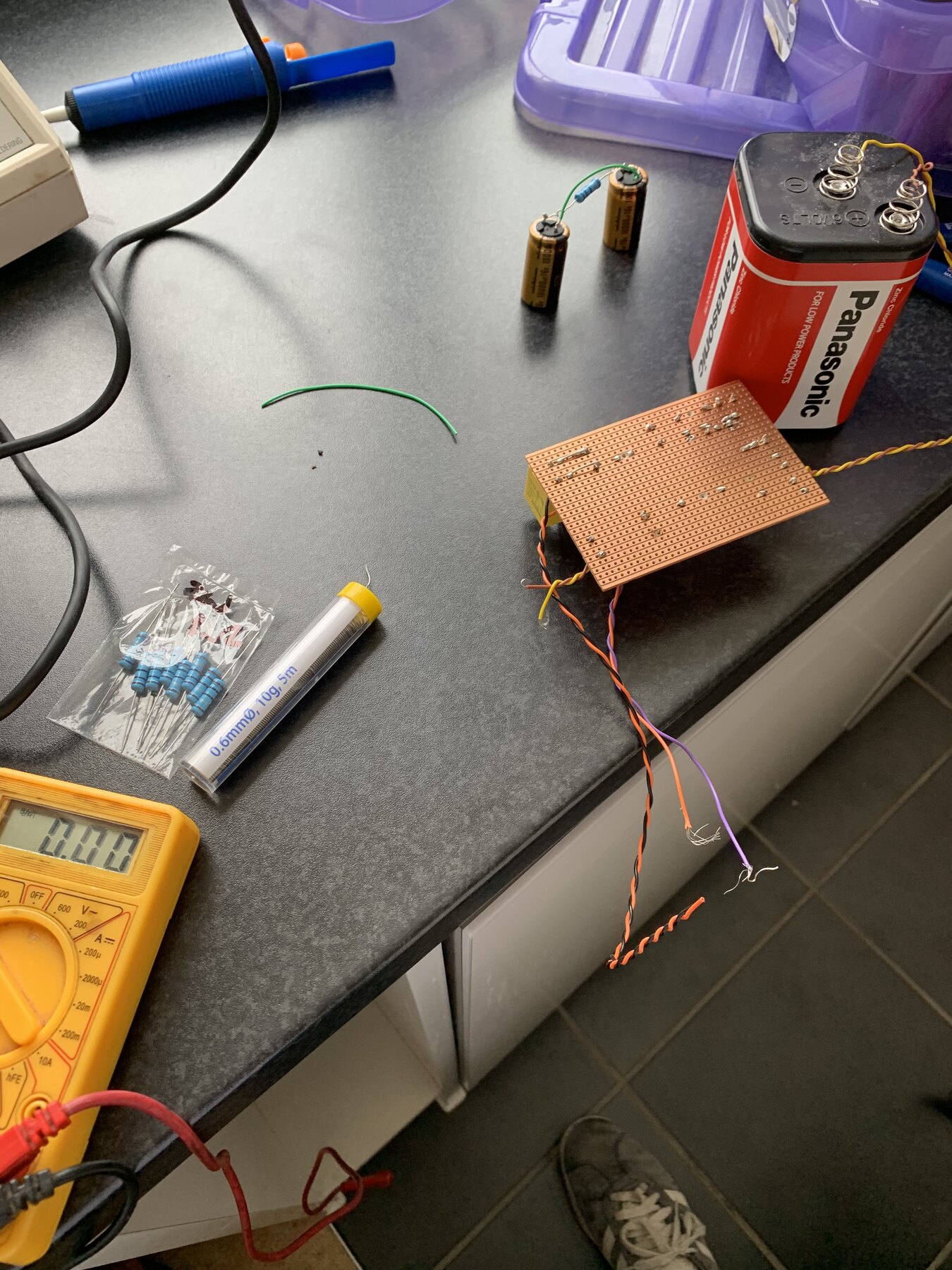
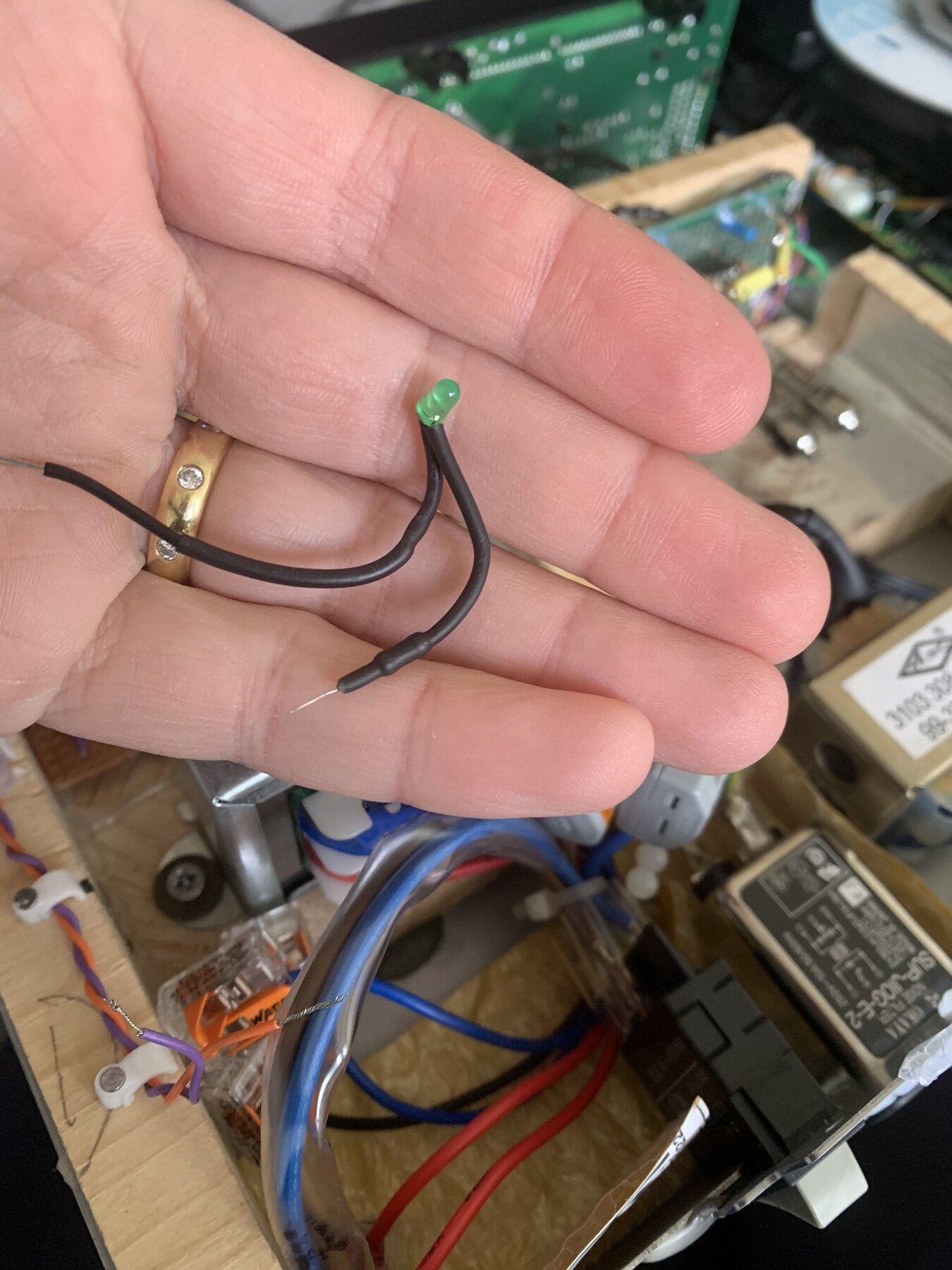
The archive includes board corrections, power-supply testing, installation changes and later refinements. That matters because the listening result did not arrive as a schematic alone. It arrived after the circuit survived real packaging, grounding, heat, gain and usability constraints.