The carrier is not the performance.
CD, vinyl, tape, PCM and DSD are treated as ways of carrying a recording. The quality of the recording, mastering and playback implementation can dominate the label on the medium.
Ask what happened to the music before asking what format it arrived in.
Recording
Microphones, room, balance, performance and production establish the information that can ever reach the listener.
Mastering
Dynamic compression, EQ, limiting and transfer choices can alter musical contrast more profoundly than changing file resolution.
Carrier and transfer
Vinyl, tape, CD or digital file each introduce their own practical strengths and limitations. A strong transfer can preserve a preferred master in another format.
Playback chain
DAC, phono stage, tape electronics, output stage and amplification determine how convincingly that stored information becomes music again.
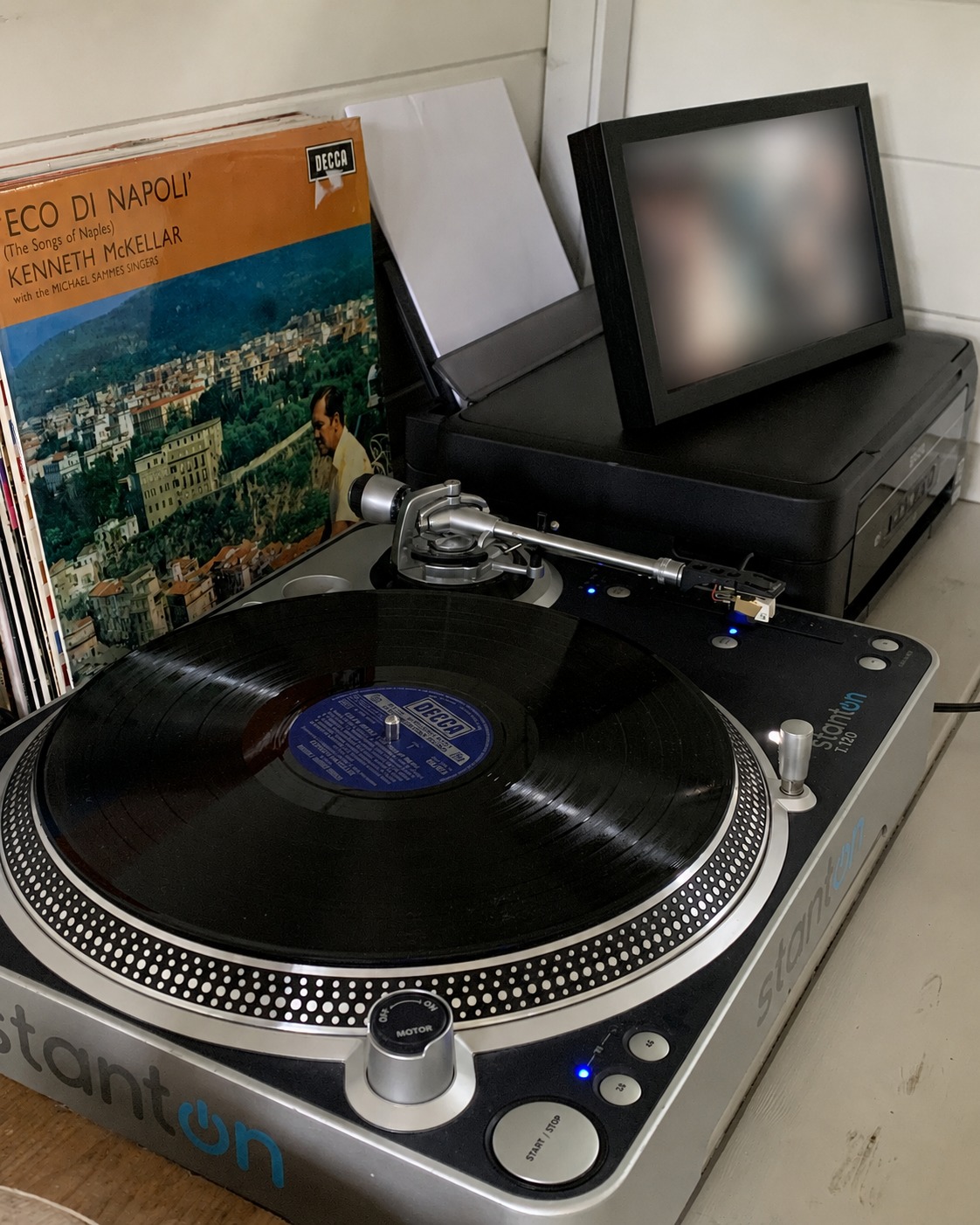
The groove exposed the mastering question.
Early vinyl listening brought scale, nuance, warmth and emotional connection. But the notes quickly recognised that older analogue masters and different mastering decisions were a major part of the experience.
That observation prevented a simple “analogue good, digital bad” conclusion. The completed CD753 valve-output source could sound deeply analogue too, reinforcing the idea that conversion and output stage matter alongside the master.
A great analogue source can become a great digital source.
The archive explores high-quality vinyl capture, PCM and DSD not to make analogue redundant, but to preserve a preferred mastering and playback chain.
Any claim that the digital copy “beats” the live vinyl chain remains system-dependent. The more durable principle is simpler: a carefully made transfer can preserve musical qualities that are absent from a poorer commercial digital master.
Source quality first, carrier second, playback architecture third.
If a CD retains its dynamic range and the desired mastering, use it. The format itself is not disqualified by being digital.
If the preferred mastering lives on vinyl or tape, preserve that version through the best practical playback and capture chain rather than treating the carrier label as sacred.
The notes explore high-rate PCM, DSD and professional recorders such as the Tascam DA-3000 as preservation tools. The chosen rate is secondary to correct levels, low noise and an undamaged source.
A transferred analogue master can then be heard through a DAC chosen for a particular role, for example a PCM63-style structured presentation or a valve-output chain.
Cassette, reel-to-reel and Hi-Fi VHS remain exploratory options where analogue-to-analogue copying itself is part of the desired experience.
The archive contains ambitious claims about what a high-quality vinyl transfer might outperform. The public site keeps the underlying idea but not the certainty: a transfer can preserve a preferred mastering and remove repeated mechanical playback variables, but its superiority must be judged from the actual chain.
Preservation starts with the most intact source available.
The master note allows CD when its dynamic range is intact, a strong vinyl transfer when that mastering is preferable, high-rate PCM or DSD where useful, and analogue recording media when their character or workflow is part of the goal.
| Source / capture | Why it appears in the archive | What matters more than the label |
|---|---|---|
| CD / 16-44.1 PCM | Still a valid carrier for an intact master. | Mastering, level, dynamics, transport/output implementation. |
| Vinyl rip | Can preserve a preferred analogue-master release. | Turntable, cartridge, phono stage, gain and capture quality. |
| 32-bit / 384 kHz PCM or DSD | High-resolution capture/processing route, including Tascam DA-3000 thinking. | Actual source quality and conversion implementation. |
| Cassette / reel-to-reel | Analogue-to-analogue preservation and a different recording aesthetic. | Deck condition, alignment, tape formulation and levels. |
| Hi-Fi VHS | An unconventional but technically serious analogue recording branch retained in the notes. | Machine condition, noise, head switching and whether the copy serves the music. |
The notes sometimes sketch a possible quality order, but explicitly keep mastering and implementation as the overriding variables. The site therefore avoids presenting a fixed format league table.
Reveal more of the recording, yes. Recreate missing information, no.
A highly resolving playback chain may make room tone, decay, backing detail or spatial relationships easier to perceive than they were through another system, or even easier to focus on than they were from one seat at the original event.
That does not mean the DAC has generated information. Microphone placement, mixing and repeat listening can make recorded relationships available for inspection in a way that live listening did not foreground. The replay system's job is to expose those encoded relationships without turning them into disconnected hi-fi effects.