Capture is a bridge, not a surrender of format.
If the best version of a recording lives on vinyl, tape or an intact CD, the archive asks how to preserve that version with the least additional damage, then replay it through whichever architecture serves the music best.
A capture can only preserve the signal that reaches it.
The quality hierarchy begins with the source release and playback chain. A transfer cannot recover dynamics removed by mastering, and it cannot remove coloration already printed into the signal without further processing.
If the digital release preserves dynamics and the desired mastering, the notes explicitly allow CD as the source rather than seeking analogue by default.
If the preferred mastering exists on LP, turntable, cartridge, alignment, phono gain/loading and noise become part of the captured master.
Where the tape itself is the desired source, machine condition, alignment, head wear, speed and tape formulation define the signal before capture.
Resolution is useful, but correct analogue input and gain are more fundamental.
The notes explore professional-style capture through Tascam DA-3000 thinking, high-rate PCM, DSD and later RME-based research. The point is headroom and preservation, not collecting the largest number on a file badge.
24/96 and higher-rate PCM appear as practical archival routes, with the master notes also exploring 32-bit / 384 kHz processing where appropriate.
DSD appears as another preservation or conversion branch, especially when the desired workflow avoids unnecessary intermediate processing.
Tascam DA-3000 is retained in the master notes; RME ADI-2 appears in later LP-transfer research as a reference-style ADC idea.
Minimal intervention is the default philosophy when the goal is to preserve a particular mastering and front-end character rather than remaster it.
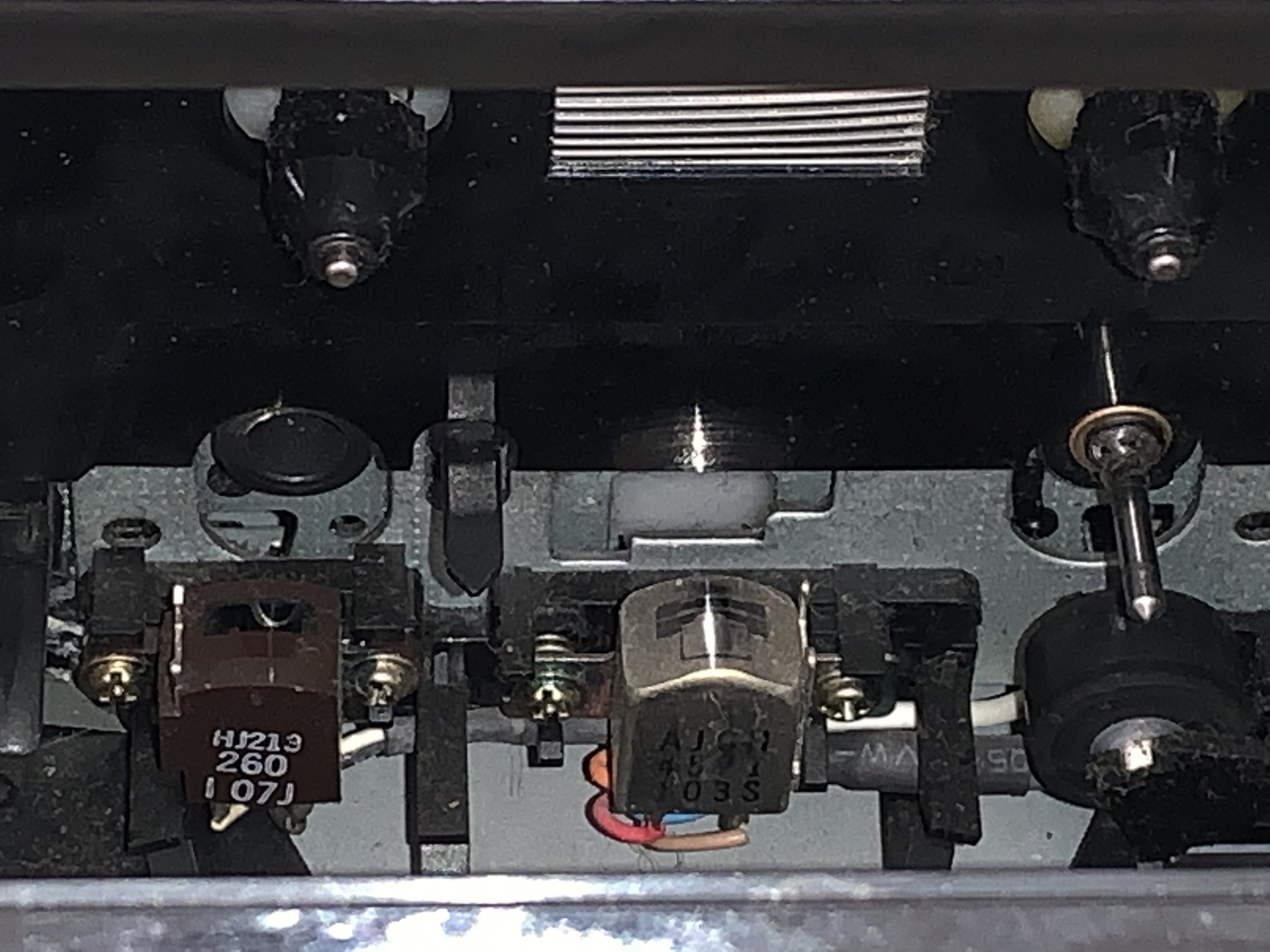
Sometimes the copying medium is part of the desired sound and ritual.
Cassette, reel-to-reel and even Hi-Fi VHS remain in the notes because preservation is not defined only as transparent digital archiving.
An analogue copy may deliberately retain saturation, temporal behaviour or physical-media ritual. That is a different goal from an archival master, and the site keeps those goals separate rather than ranking them on one ladder.
The PCM63-KY route is the most ambitious convergence experiment in the archive.
The July 2025 document imagines a high-quality LP chain feeding a reference ADC, then replay through PCM63-KY and an appropriate analogue/tube stage.
Once captured, future replay no longer adds new groove wear or fresh alignment/tracking variation. The file still contains whatever qualities and imperfections the original analogue playback printed into the transfer.
This complete chain is research. The site does not present it as a heard comparison.
Five rules keep the format experiment honest.
Do not choose vinyl, CD or tape by ideology if another release preserves more of the performance.
Headroom and gain structure matter more than chasing nominal resolution.
Turntable, cartridge, phono stage, ADC, rate and processing should be known if the transfer is to remain meaningful.
A transparent digital master and an analogue tape copy can both be useful, but they serve different purposes.