Power is not a glamorous signal component. It still shapes the conditions in which the signal exists.
From the Topping D30 supply experiment to planned R-core and filtered valve supplies, the archive repeatedly returns to noise, grounding, regulation and magnetic behaviour.
The Topping D30 made power audible enough to become a principle.
Moving from the stock supply to the iFi 15 V supply was recorded as adding grounding, micro-detail, intimacy, dimensional expansion and realism while retaining neutrality.
That is a subjective observation, not proof that every aftermarket supply improves every DAC. What it did change was the design hierarchy: power stopped being an accessory and became part of implementation.
Regulation
Stable rails reduce the opportunity for modulation and noise to contaminate sensitive analogue and digital stages.
Magnetic field
Transformer choice and physical placement can matter in compact valve/DAC builds where signal levels are small.
Ground
Layout and return paths influence hum, noise and interactions between digital, heater and analogue sections.
R-core, toroidal and EI are engineering choices first.
The later narratives explore possible subjective tendencies of transformer types, but The distinction remains clear: transformer construction affects regulation, leakage flux, mechanical noise and packaging. Any sonic language sits downstream of those real electrical conditions and remains system-dependent.
| Type | Practical attraction in the archive | Listening hypothesis |
|---|---|---|
| R-core | Low stray field, useful for valve/DAC integration | Explored for spacious, low-strain presentation |
| Toroidal | Compact, efficient, strong regulation | Explored for focus and drive |
| EI | Traditional, robust, familiar in vintage equipment | Context-dependent rather than treated as a fixed sound |
Power moved from a listening observation to a designed subsystem.
D30 + iFi 15 V
The direct 2024 observation was more grounding, micro-detail, intimacy, dimensional expansion and realism compared with the stock supply. That is a subjective listening result, but it changed the hierarchy of what deserved attention.
Battery / simplified supplies
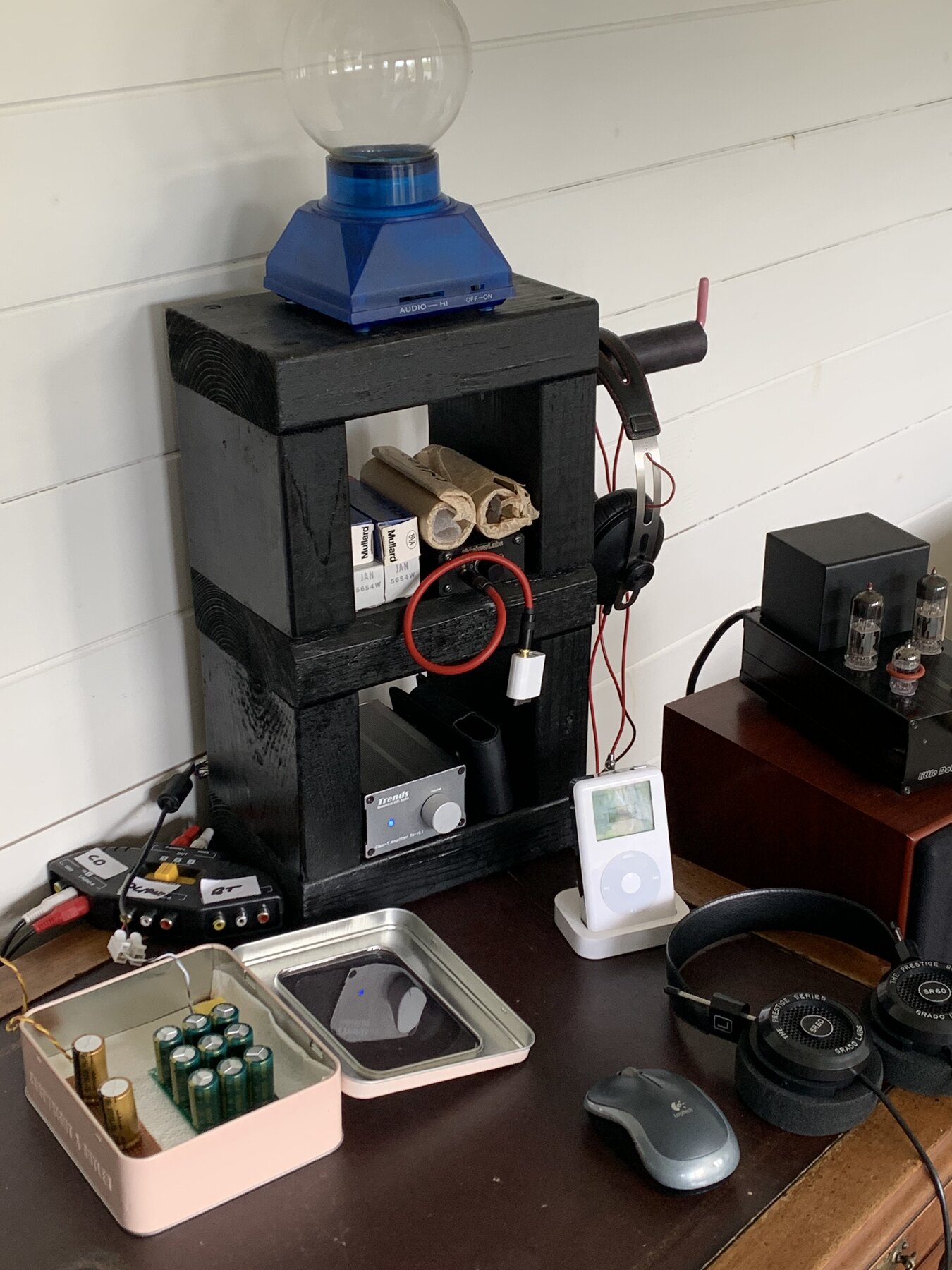
The Trends Audio path considered 12 V gel-battery operation and filtered supply modules as practical ways to reduce noise without turning power into an exotic product category.
6N16B high-voltage supply
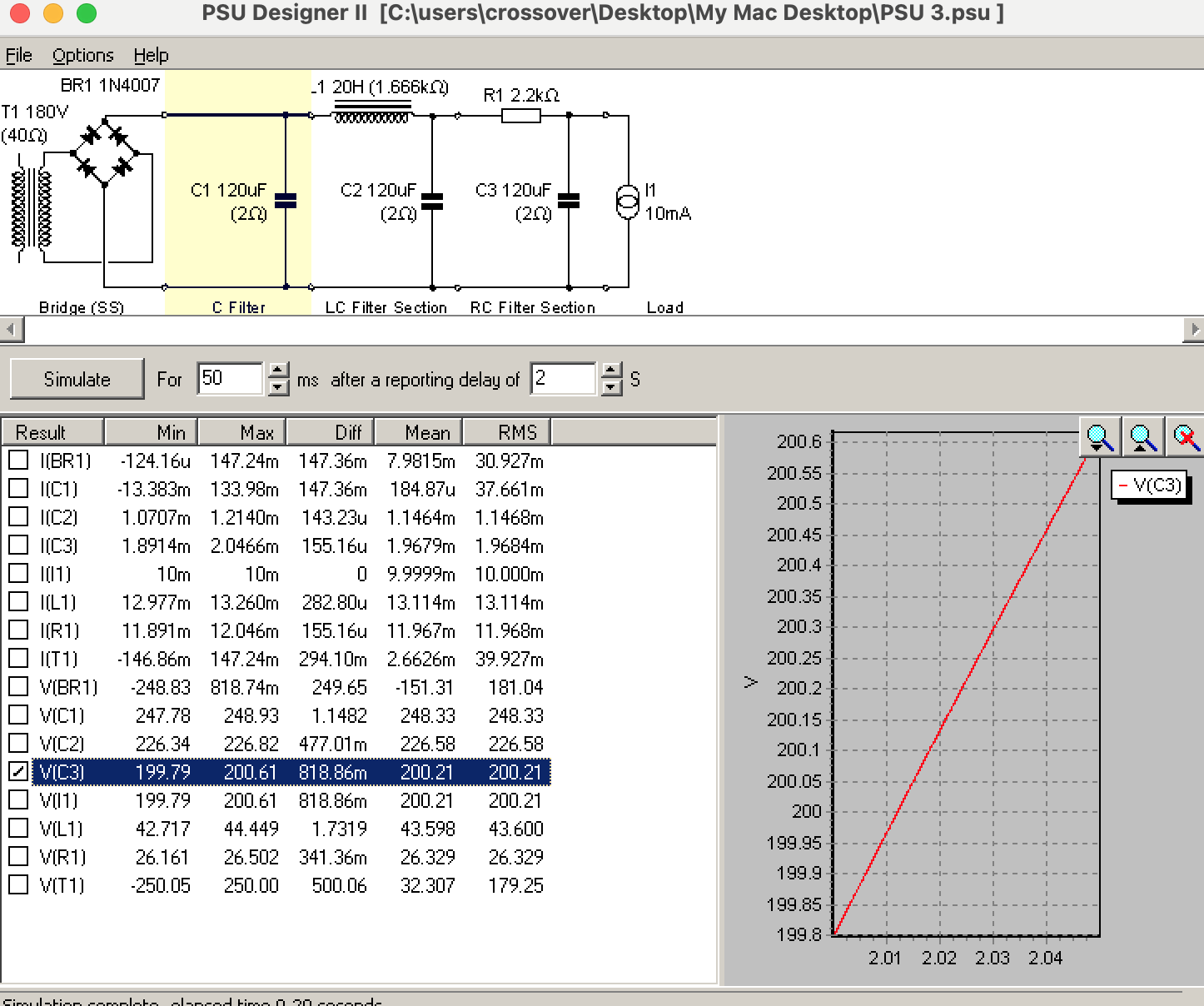
The future DAC/preamp moves from “better power” to an explicit C-L-C-R-C network, roughly 220 V B+, choke DCR, bleeders, heater reference and final-node bypassing that can be measured when built.
Battery, filtered low voltage, regulated DAC rails and high-voltage valve supplies all solve different problems.
| System | Supply approach | What the experiment was trying to isolate | Status |
|---|---|---|---|
| Trends TA-10.1 | 12 V gel battery, later filtered adapter path | Noise floor and whether a simple power stage benefits from cleaner supply behaviour. | Built / experimented |
| Topping D30 | Stock 15 V → iFi low-noise supply | Grounding, micro-detail and dimensional change before altering the DAC architecture. | Built / heard |
| MikroLampizator | Dedicated valve/output-stage supply integrated into CD chassis | Making the analogue stage electrically independent enough to become the main sonic experiment. | Built / heard |
| PCM1798 / 6N16B | Separate low-voltage DAC supply + C-L-C-R-C high-voltage valve supply | Keep digital rails and valve B+ as separate engineering tasks, with a modelled operating point around 220 V. | In development |
| Future reference DACs | R-core vs toroidal allocation | Research into magnetic leakage, regulation, current behaviour and how power architecture might complement different DAC/output-stage personalities. | Explored |