Portable players
Portable audio became a compact version of the same experiment as the main system: converter, analogue stage, power, load, format and listening behaviour all interact. The result is a set of roles rather than one winner.
Modern, intentional and old-school can coexist.
The 2026 system-integration notes stop treating portable audio as a ladder and instead assign each source a role.
iPhone + Questyle M15i Blue
More power, body and scale than the Apple dongle while retaining clarity. It is the modern convenience reference rather than a replacement for the older dedicated players.
iPod Photo / Nano + Askew
The older Wolfson-based players and modified line-out paths encourage album-led listening. Askew/BRZ remains a natural partner when the goal is intimacy rather than maximum convenience.
iPod Shuffle 1G
The 2025 notes value the absence of a screen as part of the experience, alongside a warm, balanced and rhythmically involving output stage.
Sony D-211
A serviced and recapped complete player whose headphone output became a lesson in why implementation and load matching can matter more than assuming “line out must be purer”.
Sony MZ-R90
An older ATRAC source kept because musical use and portability matter more than format prestige alone.
Cassette branches
Aiwa and Sony portable tape players preserve another form of intentional listening, with future slimline and audiophile Walkman branches researched separately.
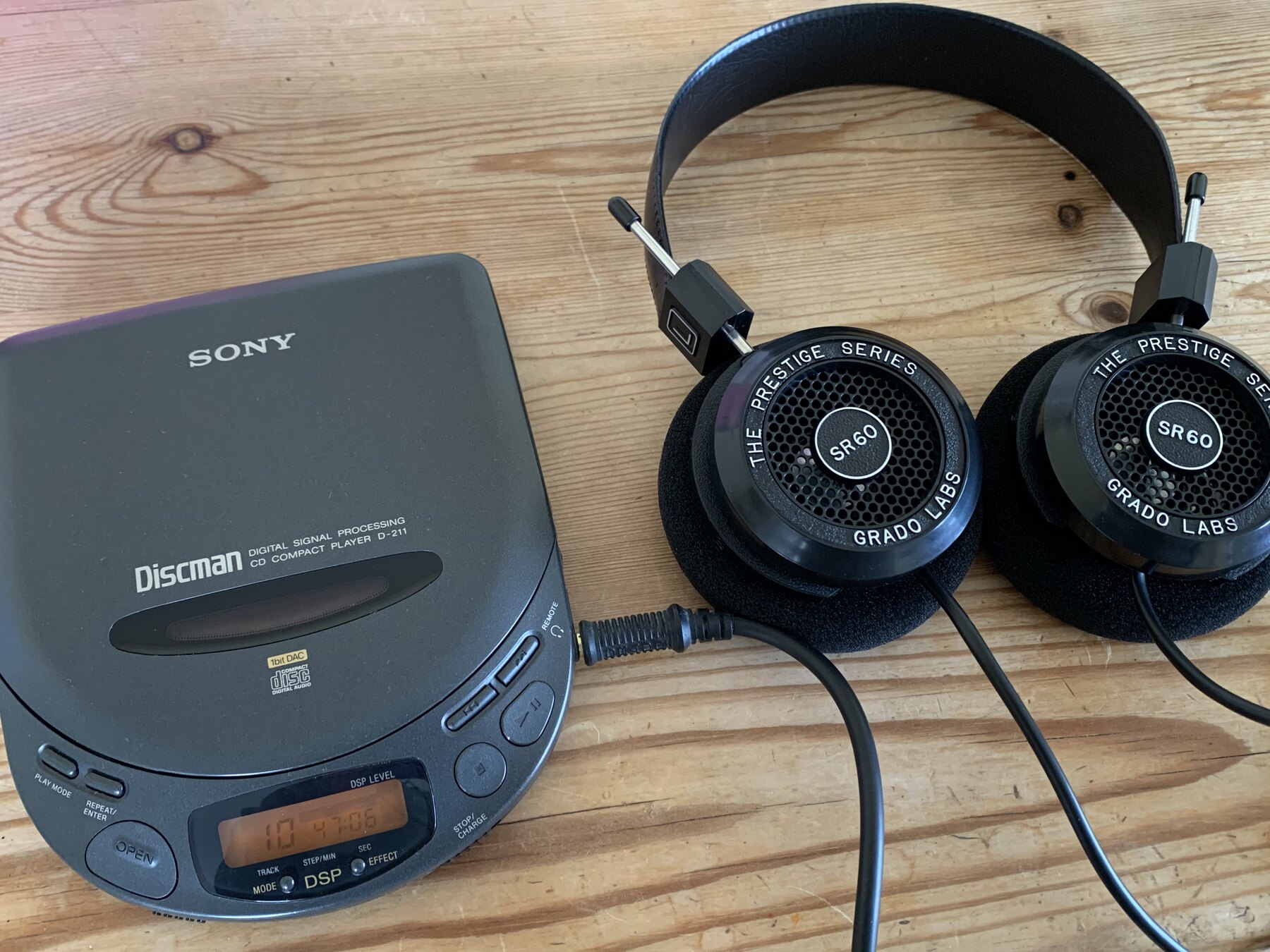
Sony D-211: the player that made “better path” more complicated.
The D-211 repeatedly sounded natural, energetic and emotionally complete through its headphone output.
The later emotional-technical map explores three possibilities: direct headphone out, line out into Askew, and even headphone out used at a sensible level into the Askew. Rather than assuming a hierarchy, the notes ask what each extra stage contributes in voltage, drive, impedance matching and analogue character.
That became a wider system rule: signal simplicity is useful, but only when the simpler path already does the electrical and musical job.
Source quality is not the only variable in listening.
A dedicated player can change behaviour before it changes frequency response.
The Living Library and Fulfilment documents make this explicit. A screenless Shuffle, an iPod loaded with chosen albums, a single CD in the D-211 or a cassette can reduce browsing and return attention to the work as a whole. That does not make the format technically superior. It makes the listening ritual different.
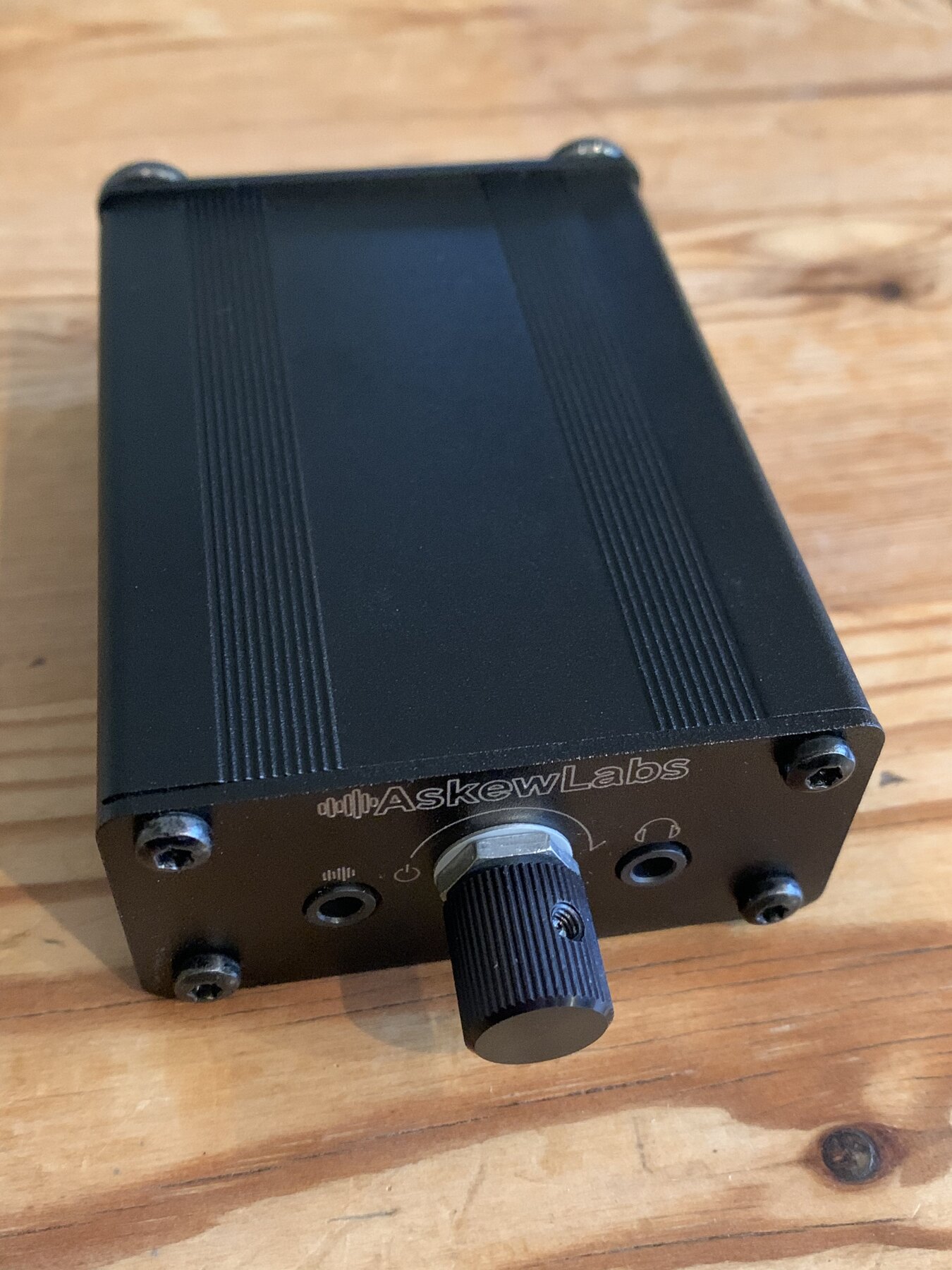
Portable research extends beyond the players already owned.
Ray Samuels SR-71A
Researched as a serious battery-powered analogue amplifier with gain flexibility, especially attractive for pairing with the older iPods and a wide range of headphones.
Denon DCP-150
A researched portable-CD “shadow reference”, useful as a contrast to the D-211 without displacing the player that has already earned a listening record.
Portable cassette
Multiple Aiwa and Sony machines were compared by role, size, serviceability and expected tonal character. The site keeps those rankings explicitly in the research category.